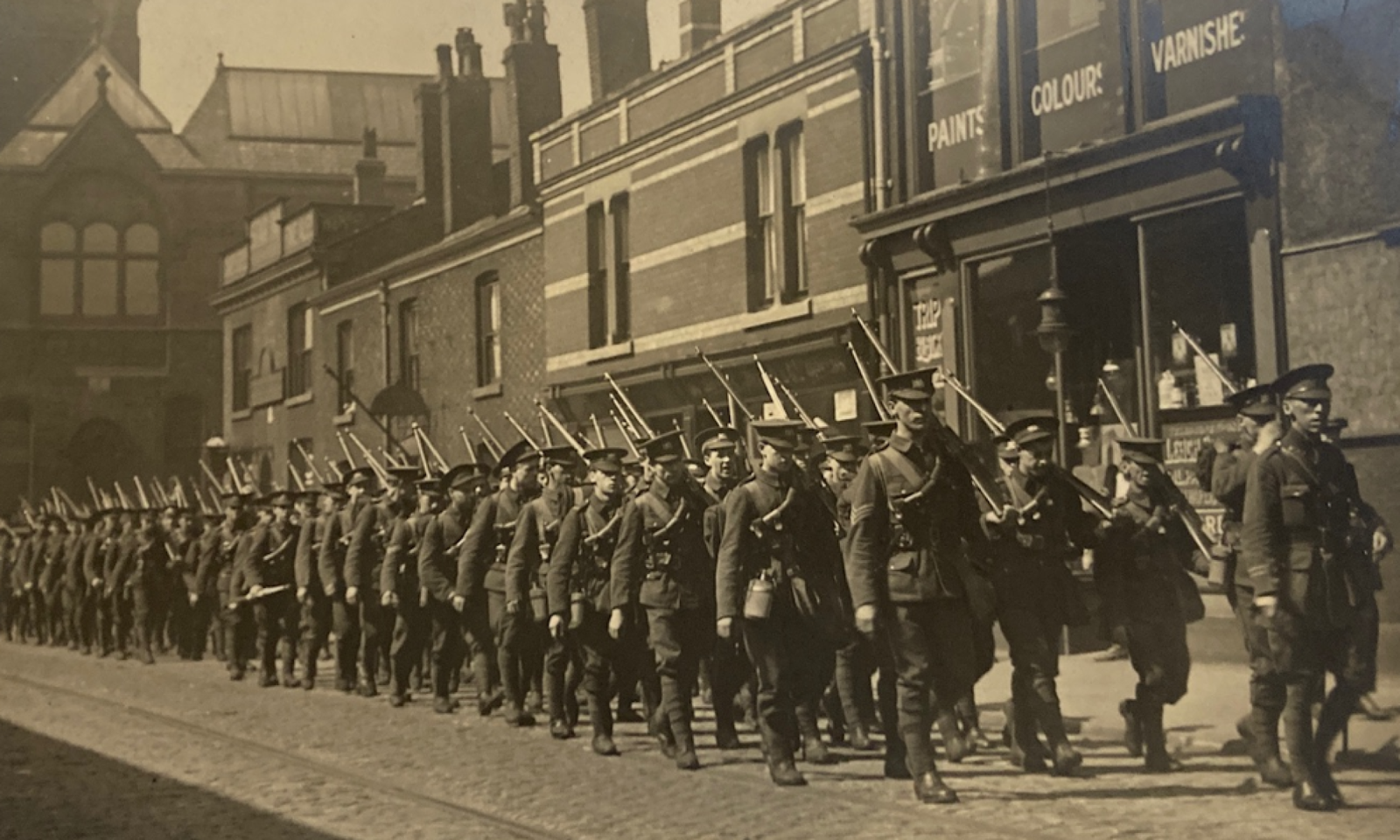
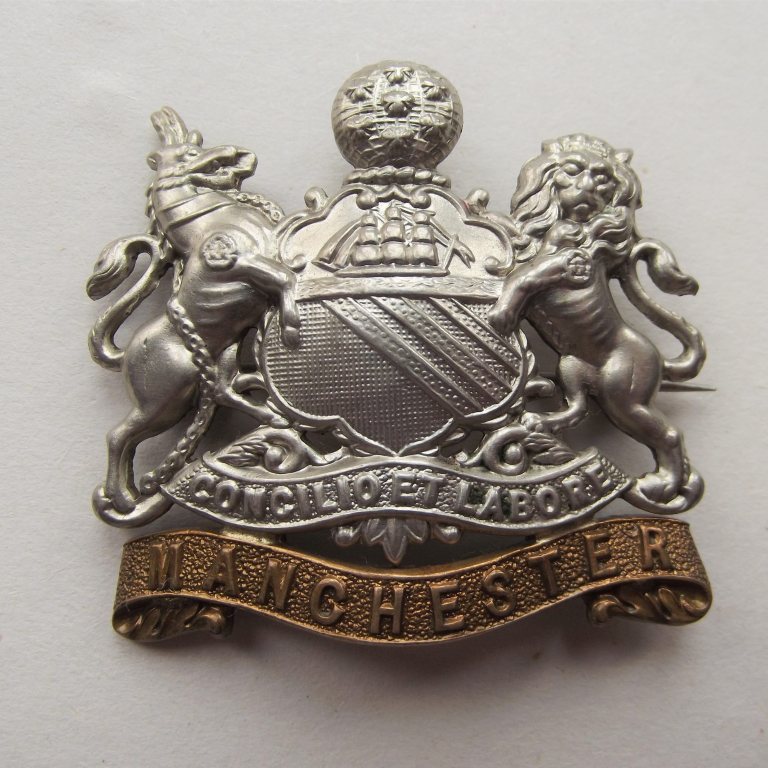
2/Lt. Robert Jacomb Norris Dale

Robert Jacomb Norris Dale was born in Kensington on November 13, 1884 and was the oldest of four children. His father, Bernard Dale, was a successful solicitor and managing partner in the firm of Dale & Company of Cornhill. Robert was educated at Haileybury College (1900-02) and later joined the Inns Court O.T.C. (popular with lawyers and others in the legal profession) in 1910, when he was 26, where he served for two years. By 1911 he was working as a solicitor in his father’s firm and living with his parents and two domestic servants in Wimbledon.
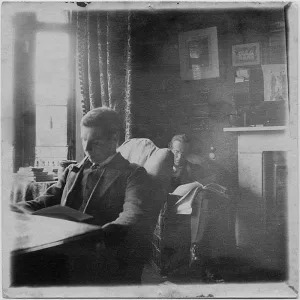
Robert Jacomb Norris Dale
Robert Jacomb Norris Dale with Father in the Background

But by 1914, apparently having now forsaken his father’s business and profession, Robert was working as a designer printer for Thomas Russell of Clun House, London a noted Commercial Advertising expert who was President of the Incorporated Society of Advertising Consultants and former Advertising Manager of the London Times.

The day after the outbreak of war, (August 5, 1914), he joined the 28th (County of London) Battalion, The London Regiment (Artists’ Rifles), as a Private (#1656). The Artists’ Rifles was a popular choice for volunteers of public schools and universities and as a Territorial Force battalion eventually provided a substantial number of officers both for the London Regiment and other Territorial Force regiments. After a very short period of training Pte. Dale embarked for France from Southampton on October 26, 1914 and was deployed with the British Expeditionary Force. He remained in France until June 17, 1915 when he left the Battalion at St. Omer to return to England upon being granted a commission as a Second Lieutenant in the 2/9th Battalion Manchester regiment (Territorial Force), dated June 18, 1915.

Interestingly, on his application for a commission he now described his occupation as: “Scholar; Author; Painter”.

He joined the 2/9th Battalion, Manchester Regiment while they were at Pease Pottage Sussex engaged in basic training. The battalion moved to Burham Camp, Kent on September 22, 1915 and around 3 weeks later, on October 13, 1915, he embarked on His Majesty’s Transport Ship Scotian at Devonport for Gallipoli with 10 other Officers, arriving at Mudros on October 24th and joined the 1/9th Battalion on Cape Helles on October 26, 1915.

Just under two months later he was tried by Field General Court Martial with Conduct to the prejudice of good order and military discipline under Section 40 of the Army Act 1881. He was found not guilty and no records remain regarding the specifics of the alleged offence.

He survived Gallipoli unscathed and sailed with the Battalion to Egypt, arriving on January 18, 1916. He was sent sick to hospital on May 2, 1916 and remained there for 12 days. Two weeks after his return he attended a 10-day course of Instruction and on September 15 was attached to the Royal Flying Corps for instruction in Aviation at 22 Reserve Squadron, Aboukir where he remained for a little over 2 months after becoming sick while with the RFC.

On February 22, 1917 he took 19 days leave in the UK, where he married the 24 year old Irene Rose Mawer, rejoining the Battalion in France on March 13. On April 8 he attended a course of instruction at the Army Telescopic Sights School rejoining the Battalion 9 days later. He was promoted to Lieutenant on July 1, 1917 and took an 11-day leave in the UK on July 28, 1917. On August 29, 1917 he was accepted to the Royal Flying Corps and was struck off the strength of the Battalion.

He was accepted as a Balloon Observer on Probation on September 24, 1917 and was attached to No. 33 Kite Balloon Section (9th Balloon Company) on October 20, 1917. He took another home leave in the UK from December 8-22, 1917.

Lt. Robert Jacomb Norris Dale was killed in action on January 31, 1918 in Italy when his balloon was attacked by an enemy aircraft and he was shot whilst in the basket. He is buried at Giavera British Cemetery, Italy and remembered on the Haileybury College Cloister Wall Memorial, Hertford Heath. He was 33 years old.
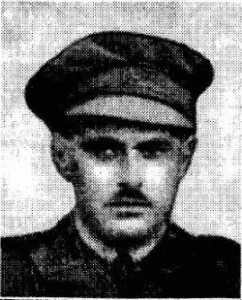
2/Lt. Frederick Beard

Frederick Beard was born in Manchester on April 6, 1890. His father, James Hogg Beard, was a Master Chemist and Druggist (a pharmacist). Frederick was the youngest of 3 boys and he also had a younger sister, Lucy. His father, James Hogg Beard, died in 1910 and by 1911 he was living in Marple with his mother, Jessie Ellen Beard (née Wraight), his brother Edward, his sister Lucy his aunt and a domestic servant. Educated at Manchester Grammar School, by 1911 he was employed as an export manager for a metal and hardware merchant.

He joined the 6th Battalion Manchester Regiment as a Private (#3057) on October 5, 1914 and was commissioned as a Second Lieutenant in the 9th Battalion Manchester Regiment (Territorial Force) on March 11, 1915. He joined the 2/9th Battalion in training at Southport and moved with them to Pease Pottage in June 1915. On October 13, 1915 he embarked on His Majesty’s Transport Ship Scotian at Devonport for Gallipoli with 10 other Officers, arriving at Mudros on October 24th and joined the Battalion on Cape Helles on October 26, 1915.

He survived Gallipoli unscathed and sailed with the Battalion to Egypt, arriving on January 18, 1916. On October 4, 1916 he was awarded 45 days home leave in the UK returning to Egypt in November. He sailed with the Battalion to France, arriving on March 11, 1917.

He was promoted to Lieutenant on July 1, 1917 and on July 29th left for 16 days home leave in the UK where he married Isabel May Ferguson. Upon his return to France he was immediately attached to the 126th Infantry Brigade where, on September 4, 1917 he was gassed at Ypres.

He was medically evacuated to England sailing from Calais on September 13, 1917 aboard the Hospital Ship Stad Antwerpen, arriving at Dover later the same day. He was medically assessed at Anstie Grange Military Hospital, Holmwood, on September 21, pronounced fit for General Service and given 3 weeks leave. He reported to the 8th Reserve battalion Manchester Regiment at Filey on October 11 but was immediately invalided, complaining of shortness of breath and palpitation after any exertion. He was medically assessed on November 28 at Scarborough and again on January 28, 1918; both indicating no improvement. On May 17, 1918, at Heaton Park, he was assessed for the last time and his condition pronounced severe and permanent. The examining Physician stating: “The injuries are severe and though improvement may take place in time, permanent ill effects have resulted from the gassing.”

He was forced to resign his commission on June 22, 1918 on account of ill-health contracted on active service, but retained the honorary rank of Lieutenant. Remarkably, his application for a wound gratuity was denied by the Ministry of Pensions, despite numerous protestations on his behalf, on the grounds of his condition not being  sufficiently serious.

After the war, he lived in Marple with his wife and became a company director. In 1920 they had a son, John Knowler Beard. He retired and moved to Buxton but his wife died in 1955 and sometime later he moved to Chipping Campden where he died on July 24, 1982. Lieutenant Frederick Beard was 92 years old.

2/Lt. Francis Cyril Hampson

Francis Cyril Hampson was born in West Didsbury on June 4, 1896. His father, Frank Hampson, owned a business that manufactured ladies’ blouses.  By 1911, Francis was a pupil at Stockport Municipal Secondary School and living in Stockport with his parents, Frank and Emily Hampson (née Midgley), his older sister Doris, his younger brother, Harry Midgley, his two younger sisters Hilda and Irene, and a domestic servant.

In September 1914 he joined the 6th Battalion Manchester Regiment as a private and 6 months later was commissioned as a Second Lieutenant in the 9th Battalion Manchester Regiment (Territorial Force) on February 18, 1915. He joined the 2/9th Battalion in training at Southport and moved with them to Pease Pottage in June 1915. He was made temporary Lieutenant on August 9, 1915. On October 13, 1915 he embarked for Gallipoli with 10 other Officers, arriving at Mudros on October 24th and joined the Battalion on Cape Helles on October 26, 1915.

He was sent sick to hospital in Alexandria on November 29, 1915 where he remained for 84 days before rejoining the battalion in Egypt on February 21, 1916. He didn’t stay with them long, because on March 14, 1916 he transferred to the Machine Gun Corps and was struck off the strength of the Battalion. He remained with the Machine Gun Corps until the end of the war and was appointed temporary Lieutenant September 1, 1916 and promoted to Lieutenant on July 1, 1917. He was disembodied on February 25, 1919 having returned from France in December 1918.

After the war he transferred to the Territorial Reserve as a Lieutenant on February 5, 1921 and in 1925 married Helen Clarkson. They lived in Stockport, where he became a company director, and in 1931 they had a daughter, Helen Patricia Hampson, followed in 1933 by a son, Francis N. Hampson.

Lieutenant Francis Cyril Hampson died on the Isle of Man on May 7, 1970. He was 73 years old.

2/Lt. Percy Parker Fielding

Percy Parker Fielding was born in Stockport on November 20, 1885. His father, William Fielding was a designer and manufacturer of Jacquard Machines used in Textile Manufacturing. Percy was the youngest of three children and he lived with his parents, his brother and sister, a governess and a domestic servant in Wilmslow.

By 1911, after the death of his father, the family moved to Newton Heath, Manchester where he was living with his widowed mother, Annie Fielding Fielding, his brother, Arthur Fielding Fielding, and sister, May Fielding. His brother worked as an engineer and assistant to a Jacquard Machine Maker while Percy managed the design business.

On November 24, 1914 he applied for a commission with the 9th Battalion Manchester Regiment. In January 1915, the Battalion was ordered to appoint eight supernumerary 2nd Lieutenants and he was granted a commission as one of them on January 20, 1915 and joined the 2/9th Battalion in training at Southport. In June 1915 he married Doris Stacey Birchenall, the sister of Lieutenant Arthur Gordon Birchenall, also of the 9th Battalion Manchester Regiment. On October 13, 1915 he embarked for Gallipoli with 10 other Officers, arriving at Mudros on October 24th and joined the 1/9th Battalion Manchester Regiment on Cape Helles on October 26, 1915.

He came through Gallipoli unscathed and sailed with the Battalion to Egypt, arriving on January 18, 1916. On May 19, 1916 he was sent to hospital in Alexandria sick and was subsequently invalided to the UK on September 6th. He spent 74 days in hospital and recovering in England before joining the 8th Reserve Battalion Manchester Regiment on November 20th and remained with them for the duration of the war, unfit to serve overseas. He was appointed acting Lieutenant on February 1, 1917 and promoted to Lieutenant on July 1, 1917. On January 1, 1918 he was Appointed Adjutant and acting Captain of the 8th Reserve Battalion, The Manchester Regiment, relinquishing the position of Adjutant and the acting rank of Captain on May 29, 1919.

He was then transferred to the 196 Territorial Force Depot of the 5th Battalion Manchester Regiment, at Wigan, as Lieutenant and Officer Commanding the Depot and remained there until October 18, 1919. During this time, his son Geoffrey Fielding was born in June 1919. He then spent 3 weeks attached to the 1st Battalion Manchester Regiment before being disembodied on November 8, 1919.

On February 5, 1921 he joined the Territorial Army Reserve of Officers as a Captain. And on June 14, 1921 he submitted his Application from an Officer on the Active List of the Territorial Force for permission to transfer to the Territorial Force Reserve. At this point he was 35 years-old and living with his family in Longsight, Manchester. His application was granted and he joined the Territorial Force Reserve Regimental List as a Captain with Class 2 fitness, (suitable for garrison duty overseas or home service).

His daughter, Dreena Margaret Fielding, was born in 1922 and Anthony Birchenall Fielding was born in July 1927. Percy was working as a textile machine factory works manager and the family lived in Stockport.

On November 20, 1935, his 50th birthday, he was forced to relinquished his commission, (under Paragraph 7, Appendix XXVI Territorial Army Regulations 1929), having attained mandatory the age limit, but retained the rank of Captain.

His oldest son, Geoffrey GW Fielding, developed tuberculosis and by October 1939 he was a patient at the Cheshire Joint Sanatorium, Loggerheads Staffordshire. The development of the streptomycin antibiotic in 1944 enabled treatment but this came too late for him and he died in 1947.

Captain Percy Parker Fielding died in Stockport on February 10, 1960. He was 74 years old.

2/Lt. Oscar Stockton Needham

Oscar Stockton Needham was born in Didsbury on November 30, 1892. His father, Herbert Needham, was a buyer of cotton and woolen for a shipping merchant. Oscar was the youngest of 3 children and he lived with his family and a domestic servant in Withington, Manchester. He was educated at Hulme Grammar School and later at Lycee d’Angoulême, France. By 1911 he was working as a clerk in the office of a shipping merchant while his brother, Herbert Sidney Needham, attended Manchester University.

In 1914 he joined the Officer Training Corps of Manchester University and was later commissioned as a Second Lieutenant in the 9th Battalion Manchester Regiment (Territorial Force) on October 12, 1914. He joined the 2/9th Battalion in training at Southport and moved with them to Pease Pottage in June 1915. He was made temporary Lieutenant on August 9, 1915. On October 13, 1915 he embarked for Gallipoli with 10 other Officers, arriving at Mudros on October 24th and joined the Battalion on Cape Helles on October 26, 1915. Upon arrival it was found that two Officers already serving at Gallipoli were of a junior rank and so he relinquished his temporary appointment.

He came through Gallipoli unscathed, serving as the Transport Officer, and sailed with the Battalion to Egypt, arriving on January 18, 1916. On February 26, 1916 he was made temporary Lieutenant and was promoted to Lieutenant on June 1, 1916. On July 23, 1916 he was awarded 35 days home leave in the UK. Two months after rejoining the Battalion he attended a course of instruction at Zeitoun for just over 3 weeks. On January 31, 1917 he left the Battalion for Port Said as part of the Advance Party, under Major R.B. Nowell, tasked with making all necessary preparations for the Battalion’s imminent departure to France.

He disembarked in France on February 10, 1917 and rejoined the Battalion a month later on March 17th. He left the Battalion to attend the 42nd Division Bombing School on May 30, 1917 and rejoined them 18 days later after spending an extra week sick in hospital. He attended a 2 months course of instruction at Nieuport from mid-July until early September and immediately upon rejoining the battalion was granted a short  11 days leave in the UK.

He was again granted two weeks leave in England from February 1-15, 1918 sailing from Boulogne on January 31 and arriving at Folkestone the same day. While on leave he contracted Impetigo and was treated at the 2nd Western General Hospital, Manchester. During his treatment he reported that he was suffering from insomnia, giddiness and a feeling of general nervousness. He was promptly diagnosed with Neurasthenia, granted 3 weeks leave after which he was attached to the 8th Reserve Battalion Manchester Regiment at Filey. The start of his illness was stated to have been September 1917 at Nieuport and it is likely that his leave in September was an attempt by the battalion to informally treat his nervousness through a short break.

He was medically assessed again on April 19th at Scarborough, pronounced still only fit for home service and directed to rejoin the 8th Reserve Battalion. A month later he was assessed again and pronounced for for General Service and directed to rejoin the 8th Reserve Battalion, now at Hunmanby, outside Filey.

Fully recovered, at least from the Army’s perspective, he attended No. 1 School of Instruction for Infantry Officers at Brocton in Staffordshire, May 18 – July 13, 1918.  He received an excellent report where it was stated that he “should make a useful Company Commander”, (which of course would result in a promotion to Captain). After attending the course he took leave until August 17th and received orders to embark for France on the 18th.

British Cellulose and Chemical Manufacturing Company, Ltd.

The British Cellulose and Chemical Manufacturing Co. was formed in 1916 by Swiss brothers, Henri and Camille Dreyfus after the British Government invited the brothers to London to produce their recently developed cellulose acetate dope for varnishing aircraft canvas skins as an alternative to nitrocellulose dope, which was easily ignited by bullets.

But in August 1918, the report of the Select Committee on the Swiss Cellulose Company, which was registered as the British Cellulose and Chemical Manufacturing Company, Limited, revealed that there had been no supervision of the company, which received tax relief and got the state to agree to pay its capital expenditures although not an economical proposition. The company secured a monopoly of cellulose acetate and received a contract worth £3,000,000. The company’s capital was £160,000 in sixpenny shares and the shareholders subsequently received £14 10s for each sixpenny share. It became a scandal and questions were asked in the Houses of Parliament. Mr. Andrew Bonar Law, leader of the government, appointed a Select Committee to look into the matter. The committee was chaired by Lord Colwyn, otherwise known as Sir  Frederick Henry Smith a prominent Mancunian businessman.

In a letter dated August 15, 1918 a representative of Lord Colwyn requested that Lt. Needham’s leave be extended for one month so that he could continue to assist the Select Committee investigating “the Cellulose case”.  His embarkation orders for France were postponed for a month, his leave extension granted and notice was forwarded to the Imperial Hotel in Russell Square, London where Lt. Needham was staying. Upon receiving the news of the leave extension a further 3 months extension was requested which, although initially denied, was eventually granted on the basis that Lt. Needham held specialist knowledge and the committee work was of national importance. Unfortunately his leave was granted without pay but it was extended to December 15, 1918. Predictably, a further 3 months leave extension was requested and granted in mid December expiring on March 15, 1919.

His committee work done, Lt. Needham returned to the 8th Reserve battalion, Manchester Regiment and was demobilised on April 7, 1919. He resigned his commission, retaining the rank of Lieutenant, effective January 4, 1921.

South Africa

After the war, in 1921, he sailed to South Africa with the intention to permanently reside there.  While in South Africa he met and married Mary Barkley Denne, the daughter of a Major in the Royal Artillery who had emigrated to South Africa putting his knowledge of explosives to use in the mining industry. Oscar Needham lived in South Africa, with his wife, working as a salesman in the mining industry until his death in Johannesburg on July 22, 1965. Lt. Oscar Stockton Needham was 72 years old.

2/Lt. Bernard Harold Brister

Bernard Harold Brister was born in Dublin on September 14, 1887. His father, Joseph Charles Brister, was a stockbroker. Bernard was the youngest of 3 sons and also had 3 younger sisters. The family and a domestic servant were living in Chorlton-cum-Hardy by 1901. He was educated at William Hulme’s Grammar School, Manchester from April 1899 to December 1903. In 1910 he traveled to Brazil and resided there for 4 years before returning to the UK in May 1914. While in Brazil he had been employed as a bookkeeper.

He enlisted in the Duke of Lancasters Own Yeomanry, in Manchester, on September 1, 1914 and was discharged after 100 days when he was given permission to transfer to the King Edward’s Horse, a cavalry regiment. He joined the 1st Battalion King Edward’s Horse on December 9, 1914, in Watford, as an enlisted man and was subsequently discharged to a commission on June 9, 1915. He was commissioned into the 9th Battalion Manchester Regiment (Territorial Force) on June 10, 1915.

On October 13, 1915 he embarked on His Majesty’s Transport Ship Scotian at Devonport for Gallipoli with 10 other Officers, arriving at Mudros on October 24th and joined the Battalion on Cape Helles on October 26, 1915.

He sailed with the Battalion to Egypt, arriving on January 18, 1916 and temporarily became acting Transport Officer when Lt. Shatwell reported sick. He came down with Malaria on March 5, 1916 and went to the Government Hospital at Suez for treatment. He became dangerously ill with suspected typhoid in April and, although recovered, the medical board found him to be unfit for general service. While waiting to return to the UK he contracted “Malta Fever” (Brucellosis) and was admitted to the Nasreih Schools Hospital in Cairo on May 18th. Sufficiently recovered to sail, he embarked HS Letitia on May 29, 1916 in Alexandria bound for the UK. Once in the UK he was granted leave to convalesce at home until August 19, 1916.

In August he was medically assessed and sent to the 9th Reserve Battalion Manchester Regiment for home service. Bernard Harold Brister was fluent in Portuguese, having spent 4 years residing abroad prior to the war, and so was assigned as a translator to the British Mission attached to the Portuguese Expeditionary Force in France. During his time in France, he was promoted to Lieutenant, effective July 1, 1917 and mentioned in Sir Douglas Haig’s Despatch of November 7, 1917.

Unfortunately, on October 8, 1917 he was injured in France when he fell from his horse. He was evacuated to the UK on October 21st and admitted to 1st Eastern General Hospital, Cambridge on October 29, 1918 suffering from a contusion to the right hip. He was granted leave from October 21, 1917 to January 1, 1918 to recover at home. He was medically assessed again on January 21st and found to be fit enough to return to France. He rejoined the British Mission on February 13, 1918.

On October 23, 1918 he was taken sick to hospital and evacuated to the UK. Assessed on November 6, 1918 he was once again given leave to recover at home. He was re-assessed on March 18, 1919 and found to be permanently unfit for further military service. He relinquished his commission, retaining the rank of Lieutenant, due to ill health contracted on active service, on May 24, 1919.

After the war he worked as a commercial traveler and traveled internationally. Lt. Bernard Harold Brister died in Manchester on July 25, 1977. He was 89 years old.

2/Lt. Irvine Dearnaley

Irvine Dearnaley was born in Ashton under Lyne on April 2, 1884. His father, Irvine Dearnaley, was a professor of music and organist at Ashton Parish Church but he died in 1894 when young Irvine was only 10 years old. The family lived on Fraser St in Ashton and Irvine, the youngest of 5 children, was educated at the parochial school. He started work as a clerk in a cotton mill and became Secretary and Salesman at the Texas Mill, and later the Minerva Mills. By 1914 he was a Yarn Agent and Director of the Harper Twist Company which, among other things, owned the Harper Mill in Ashton. During this time, he became House Secretary of the Ashton Golf Club and was one of several Officers who were members of the club.

2/Lt. Irvine Dearnaley

He was commissioned Second Lieutenant in the 9th Battalion Manchester Regiment (Territorial Force) on November 14, 1914 and within two weeks was appointed temporary Captain. He joined the 2/9th Battalion in training at Southport and moved with them to Pease Pottage in June 1915. On October 13, 1915 he embarked on His Majesty’s Transport Ship Scotian at Devonport for Gallipoli with 10 other Officers, arriving at Mudros on October 24th and joined the Battalion on Cape Helles on October 26, 1915.

On November 12, 1915 the Battalion moved into the trenches and on November 23, 1915 Captain Irvine Dearnaley was killed in action near Boyes Point. He is buried in Twelve Tree Copse Cemetery and commemorated on the Ashton under Lyne Civic Memorial.

Twelve Tree Copse Cemetery

In Ashton, the following short article appeared in the Saturday December 4, 1915 edition:

The news of the death of Captain Irvine Dearnaley in action has called forth universal expressions of sorrow. His early death is more than usually pathetic. Irvine Dearnaley was one of the strenuous young men who seemed destined to play an important part in the life of Ashton. He had already done much good work on its social, political, and religious side. He was also well known in the cotton circles of Ashton and Manchester. When the war broke out, he was one of the first to take up a commission in the 1st Reserve Battalion of the Ashton Territorials for foreign service. In doing so he gave up a most promising business, which he had only recently ventured in as a yarn agent in Manchester. Life for him held out rosy prospects, and he might have gone on advancing his position in life and looking forward to doing some great public service for his town. His engagement to Miss May Mills, of Stalybridge, had only recently been announced. It seems but a few weeks since he was in Ashton on his last leave before leaving for the front. He looked especially smart in his uniform and seemed the picture of young and robust health. He will be greatly missed.

2/Lt. Sydney Naylor

Sydney Naylor was born on May 4, 1891 in Urmston, Manchester and was the oldest child of George and Edith Naylor (née Cowin). George Naylor owned a Stockbroker’s business and Sydney grew up in Urmston with his parents, two younger sisters, Edith Elizabeth and Annie Josephine, and a domestic servant. Sydney was educated at Manchester Grammar School and, like his father, became a stockbroker working at the Manchester Stock Exchange from 1909 to 1914.

Gallipoli

At the outbreak of war, Sydney joined the Manchester University O.T.C. and was commissioned as a Second Lieutenant in the 9th Battalion Manchester Regiment, Territorial Force on November 7, 1914 where he was quickly appointed Temporary Lieutenant two weeks later. He joined the 2/9th Battalion in training at Southport but in early 1915 attended a general officer’s course in Formby followed by a physical training and bayonet fighting course at Aldershot. He moved with the 2/9th Battalion to Pease Pottage in June 1915 and on October 13, 1915 he embarked for Gallipoli with 10 other Officers, arriving at Mudros on October 24th, joining the Battalion on Cape Helles on October 26, 1915. Upon arrival it was found that two Officers already serving at Gallipoli were of a junior rank and so he was forced to relinquish his temporary appointment. On November 26, 1915 he embarked on the Hospital Ship Assaye suffering from a gunshot wound to the head, losing his right eye. He was medically evacuated to hospital at Mudros on November 29 and then back to the UK.

Egypt

He ultimately received a £250 gratuity and an annual pension of £100 for his permanent sight disability but, after he medically recovered, he joined the 3/9th Battalion, Manchester Regiment at Codford in January 1916. He rejoined the 1/9th Battalion in Egypt on October 25, 1916 but within 3 days reported sick to hospital. On November 12, 1916 he was promoted to Lieutenant and was attached to the 1st Garrison Battalion, The Devonshire Regiment, in Cairo, and struck of the strength of the Battalion.

Palestine

In May 1917 he became an Orderly Officer to the GOC Palestine Line of Communications (LoC) and in November was appointed Staff Lieutenant, 1st Class Palestine LoC in Rafa. He evidently had done good work because he was awarded the Military Cross in the King’s Birthday Honours List on May 31, 1918. And on June 24, 1918 he was awarded a commission as a Lieutenant in the regular forces with the Duke of Wellington’s Regiment (West Riding). In September 1918 relinquished his staff appointment at his own request and was posted to the 1st Battalion, Manchester Regiment in Palestine. Four months later he returned to the Palestine LoC as Staff Lieutenant, 1st Class in Jerusalem where he remained until November 1919 when he was appointed Staff Captain to the 8th Infantry Brigade.

Inter-War Years Home Service

He returned to England in November 1921 and, after some leave, in February 1922 was posted to the 2nd Battalion, Duke of Wellington’s Regiment (West Riding), joining them at Aldershot the following month. He attended a training course at the School of Hygiene, Puckeridge Hill Aldershot followed by a Machine Gun Course at Seaford. He was then appointed Adjutant at the Depot in Halifax, attending an Adjutants’ Physical Training Course at Aldershot in 1925.

Prior to that, in January 1923, he married Doris Jean Robertson Brand and their daughter Gillian was born two years later on April 5, 1925.

He remained at Halifax until 1926 when he was temporarily posted to the 1st Battalion for special duty for six months in Scotland, during which time he attended a Combined Rifle & Light Automatic Wings training course. Upon his return he was stationed at Skipton and appointed Adjutant and temporary Captain of the 6th Battalion, Duke of Wellington’s Regiment (West Riding) on January 31, 1927, and promoted to Captain the following year. He completed his tour of duty as Adjutant in 1931 and was again temporarily attached to the 1st Battalion, at Aldershot, before moving to Southampton where he was appointed Assistant Embarkation Staff Officer in April 1932.

In 1934 he was promoted to Brevet Major and on May 26, 1936 he relinquished his appointment as Assistant Embarkation Officer and retired from the Army, on retired Captain’s pay, and was placed on the Regular Army Reserve of Officers (R.A.R.O.) List.

He and his family moved to High Halden, Old Hill, Staffordshire.

World War II

He was mobilized on August 26, 1939 and reported for Embarkation Duties at Newport, Monmouthshire. There he was appointed Deputy Assistant Quarter-Master General (D.A.Q.M.G.) and Embarkation Commandant, Movement Control, and promoted to Major and Local Lieutenant-Colonel. [Local rank meaning that he was paid at the rate of his substantive rank and not that of the local rank]. On October 29, 1939 he proceeded to France on temporary duty returning a week later. Upon his return he was granted the acting rank of Lieutenant-Colonel, (with commensurate pay), and appointed Assistant Quarter-Master General (A.Q.M.G.), South Wales Ports, three months later being made temporary Lt.-Col. In October 1941 he was granted the Local rank of Colonel.

After the Japanese attack on Pearl Harbor on December 7, 1941 America entered the war and by the middle of 1942 hundreds of thousands of tons of US cargo was being unloaded at UK ports each month. By the end of the war the Bristol Channel ports alone unloaded more than 5.5M tons of US cargo. Col. Naylor, in his capacity as A.Q.M.G. (M) South Wales Ports, worked closely with the US Port commanders to facilitate an efficient port operation and smooth transition of control over to the US military in preparation for the D-Day landings in France.

In May 1943 he relinquished his appointment as A.Q.M.G. (M) South Wales Ports and was appointed Colonel Q (M), Bristol Channel Ports, with paid acting rank of Colonel but substantive rank of Lieutenant-Colonel. He retained this position, still based in Newport, until January 1, 1946 when he relinquished his appointment and was struck off the strength. After 2 months accrued leave, he was demobilized and ceased to belong to the Regular Army Reserve of Officers, having exceeded the age limit but retained the honorary rank of Colonel.

A year earlier, on January 1, 1945, he was awarded the O.B.E., Military Division, for his wartime services. And in January 1947 he was awarded the Legion of Merit, Degree of Officer by the President of the United States of America in recognition of distinguished services in the cause of the Allies.

Colonel Sydney Naylor, M.C., O.B.E. died in Staffordshire on April 4, 1952 a month before his 61st birthday.


2/Lt. William Neville Broadbent Bury

William Neville Broadbent Bury was born in Salford on June 11, 1890. His father, Joshua Bury, was a Land Agent and Surveyor and owned his own business. William was the youngest of three children and by 1901 he was living in Salford with his father, his mother Lucy Annie Bury (née Taylor), his sisters Dorothy and Nora and two domestic servants. He was educated at Lawrence House School for Young Gentlemen, St Annes on Sea and then at Blundell’s School, Tiverton (1904-07), where he was a member of the Officer Training Corps (OTC). His father’s business flourished and by 1911 he was working with his father as a Land Surveyor and living with his parents, his aunt, two domestic servants and a chauffeur. In August 1913 he married Muriel Lonsdale at Manchester Cathedral.

In 1914 he joined the OCT at Manchester University and was duly commissioned as Second Lieutenant in the 9th Battalion Manchester Regiment (Territorial Force) on November 7, 1914 where he was quickly appointed Temporary Lieutenant two weeks later. He joined the 2/9th Battalion in training at Southport and moved with them to Pease Pottage in June 1915. On October 13, 1915 he embarked for Gallipoli with 10 other Officers, arriving at Mudros on October 24th and joined the Battalion on Cape Helles on October 26, 1915. Upon arrival it was found that two Officers already serving at Gallipoli were of a junior rank and so he relinquished his temporary appointment. Two weeks later he was sent to hospital sick and remained there for 9 days.

He sailed with the Battalion to Egypt, arriving on January 21, 1916. On March 21, 1916 he again was sent to hospital sick and remained there for six days. On May 19, 1916 he was awarded 51 days home leave in the UK and was promoted to Lieutenant on June 1st while he was on leave. After he returned to Egypt he attended a 3 week course of Instruction at Zeitoun, in September, where he qualified as a 1st Class Lewis Gun Instructor. Shortly after he rejoined the Battalion he again reported sick to hospital where he remained for 3 months.

He sailed with the Battalion to France, arriving on March 11, 1917.  On May 6 he left for a course of instruction at Foucaucourt where he remained for 39 days and around 10 days after rejoining the Battalion reported sick to hospital where he remained for 8 days. He was awarded 11 days home leave in the UK from July 17-28th and a month after his return was attached to the 42nd Divisional Depot Battalion. On November 28, 1917 he was seconded to the Tank Corps. He was appointed acting Captain while commanding a tank section on December 11, 1917 and was made temporary Captain on October 19, 1918. Transferring to the unemployed list on January 24, 1919 he resigned his commission sometime later, retaining the rank of Captain.

After the war he briefly attended Cambridge in 1919 and then went into business with his father and brother-in-law, Robert Edgar Stephenson, and they formed the partnership Joshua Bury, Son and Stephenson, Land Surveyors. In 1921 he applied for transfer to the Territorial Army Reserve of Officers.

During the interwar years he became a Fellow of the Chartered Surveyor Institution but eventually retired from the business on April 1, 1935 and moved to Bournemouth. His father died suddenly four months later. While in Bournemouth, he married Mary E. Brooker and they were living there when war broke out in 1939. As a Captain in the Territorial Army Reserve of Officers he submitted an ‘Application for Registration in the Army Officers’ Emergency Reserve for Re-Employment in, or Appointment to, an Emergency Commission in His Majesty’s Land Forces’. His application was accepted and he was duly mobilised as a Captain in the Manchester Regiment. He only served for a short period and, having reached the age limit, retired and retained his rank on November 2, 1940.

Captain William Neville Broadbent Bury died in October 1971. He was 81 years old.

2/Lt. William Henry Demel

William Henry Demel was born in Stretford, Lancashire, on 4 April 1893. His father, Carl Frederick William Demel, was a German national and was living and working in Stretford as a correspondent. 10 years later he was a manager in a shipping office and by 1911 Carl Demel was managing director of a metal merchant and had become a naturalized citizen. By this time, the family which included his wife, Helen Foster Demel, two sons, George Carl Demel and William Henry Demel, and daughter Frieda Eva Demel were living on Sandy lane, Stretford with a domestic servant. William was 17 years old and working as a clerk.

William Henry Demel was commissioned Second Lieutenant in the 9th Battalion Manchester Regiment on 25 February 1915, from the Manchester University Contingent, Senior Division, Officers Training Corps. joined the 2/9th at training in Southport and moved with them to Pease Pottage in June 1915.

On October 8, 1915 he boarded His Majesty’s Transport Ship Demosthenes along with two other Officers and 134 other ranks bound for Gallipoli. They arrived at Mudros on October 20th and joined the Battalion at Cape Helles on October 22, 1915. He served with the Battalion in Gallipoli for the remainder of the campaign and then sailed with them to Egypt where they arrived on January 16, 1916.

On December 14, 1916 he was attached to the Royal Flying Corps, and after a period at the R.F.C. School of Instruction he was transferred to No. 39 Reserve Squadron at Montrose, Scotland, to begin training as a pilot. He was made Flying Officer on May 23, 1917, and whilst still on secondment to the RFC was promoted to Lieutenant in the Manchester Regiment on July 1, 1917. He was subsequently attached to No. 77 (Home Defence) Squadron of the 6th Brigade, based in Edinburgh, specifically to train in night bombing.

After training, he was posted to No. 149 (Night Bomber) Squadron as a Flight Commander on May 22, 1918. The Squadron was sent to France on June 2, 1918 where they remained for the duration of the war, based at various locations.  He took part in 50 flights dropping a total of 389 bombs and on September 16, 1918 successfully made a forced landing on bad ground West of Neuve Eglise when his plane was brought down due to enemy fire whilst on a bombing raid. Both he and his observer were able to walk away uninjured.

For his services he was awarded the Distinguished Flying Cross, and was presented with this D.F.C. by H.M. King George V at Buckingham Palace on May 12, 1920.

D.F.C. London Gazette 3 June 1919:

This Officer has done continuously good work as a Flight Commander in a Night Bombing Squadron. He has crossed the lines on 44 night raids, successfully reaching his objectives frequently under very difficult weather conditions.

Demel was posted to the Home Establishment on November 15, 1918, but remained in France until being invalided to England from Wimereux on March 8, 1919 with Influenza. Transferring to the unemployed list on March 20, 1919, he relinquished his Royal Air Force commission on March 4, 1921, and was appointed Captain in the 9th Battalion, Manchester Regiment (Territorial Force) when he relinquished his Territorial commission due to ill-health on 21 June 1924.

He married Phyllis Brundrit Higham on July 19, 1922 and together they had two children. John Glassford Demel was born on July 10, 1923 and Janet Ruth Demel was born on December 23, 1932. The family lived in Birmingham and William worked as a sales manager in the metals industry.

On 25 March 1939, Demel was granted a commission as Flight Lieutenant in No. 915 (County of Warwick) Squadron, a Barrage Balloon Squadron of the Auxiliary Air Force. Since William was to be away for an extended period, his wife and children moved to Anglesey and in August 1939, shortly before the outbreak of world war two, his 16 year old son sailed to Brazil to finish his studies.

William transferred to the Balloon Branch on March 27, 1940, and was promoted to Temporary Squadron Leader on September 1st of that year, transitioning from flying duties to administrative duties. He transferred to the Administrative and Special Duties Branch on July 17, 1941, and then to the Headquarters of the newly-formed No. 44 (Ferry Service) Group on August 15, 1941.  He became head of both Administration and Organisation and was granted the non-substantive rank of acting Wing Commander. Demel was granted to the non-substantive rank of temporary Wing Commander on January 1, 1944, before resigning his commission on October 1, 1944, retaining the rank of Wing Commander. Tragedy struck on October 9, 1944 when his son, Flight Officer John Glassford Demel was killed in a flying accident while serving as a flying instructor in the South African Air Force, at 25 Air School in Standerton South Africa. He was just 21 years old.

For his services during the Second World War Wing Commander William Henry Demel was twice recommended for the O.B.E. (which he did not receive) but he was awarded the Air Efficiency Award in 1949.

After the War he returned to working within the metal industry, and between 1958 and 1960 was Chairman of the Midlands Area Council of the Royal Metal Trades Pension and Benevolent Society. Shortly thereafter, he retired and moved with his wife to Anglesey.

Wing Commander William Henry Demel, D.F.C. died in Anglesey on December 24, 1979 his wife predeceasing him. He was 86 years old.