Frank Hamer was born in Ashton-under-Lyne on March 4, 1880 to William and Ann (nee Whitehead) Hamer. William Hamer was a successful cotton spinner and a pillar of the community later becoming a Justice of the Peace and member of the Ashton Town Council. Frank Hamer was the fifth of seven sons and one of eight children. He was educated at Manchester Grammar School, attending from from 1893 to 1897, and the captain of the school’s cup winning football team of 1896.
By 1906 he was a Chartered Accountant and as such was one of the Honorary Auditors to the Manchester Grammar, Old Mancunians Association and a lecturer in Accountancy to the Institute of Bankers. This was also the year that he joined his father as a member of the Ashton-under-Lyne Town Council.
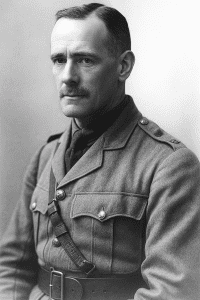
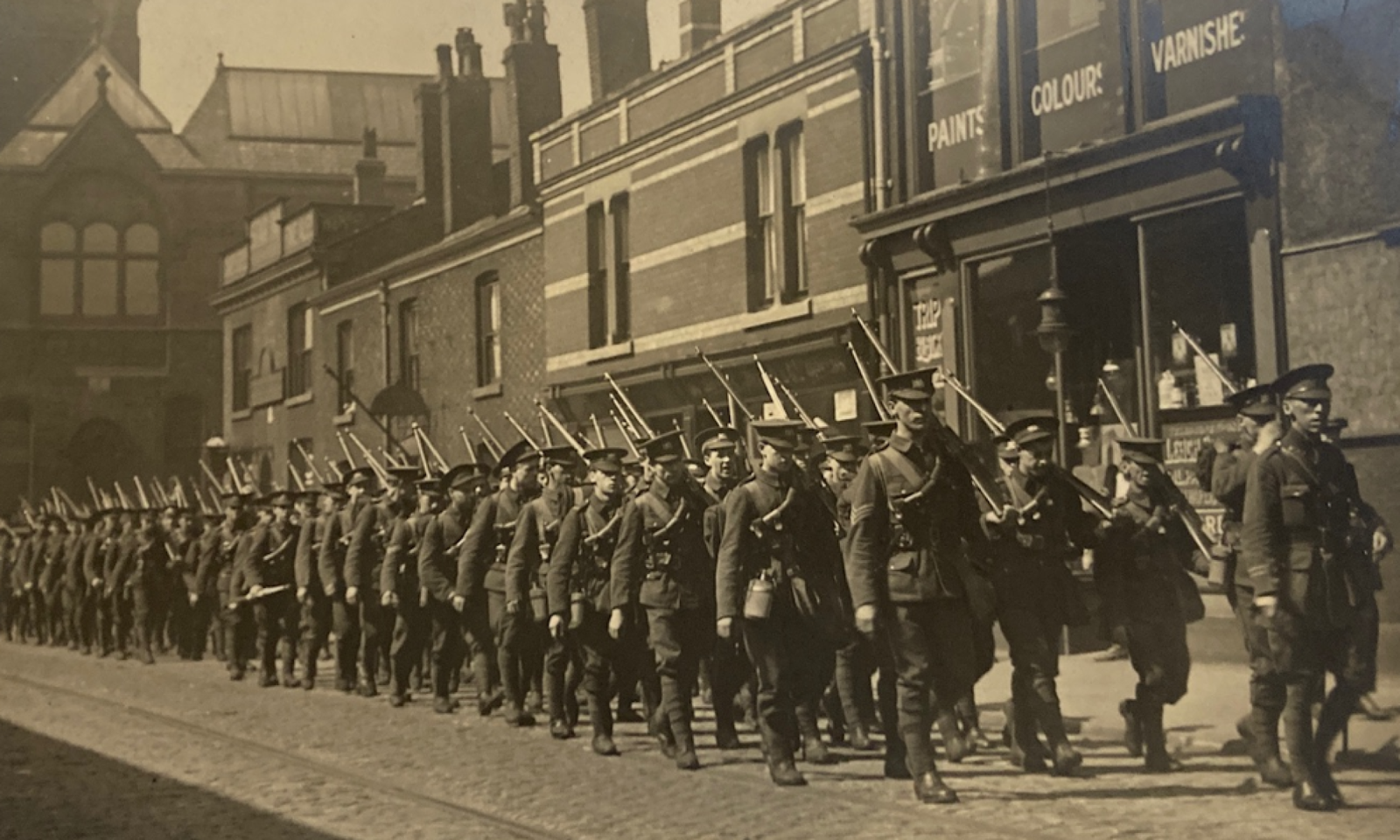
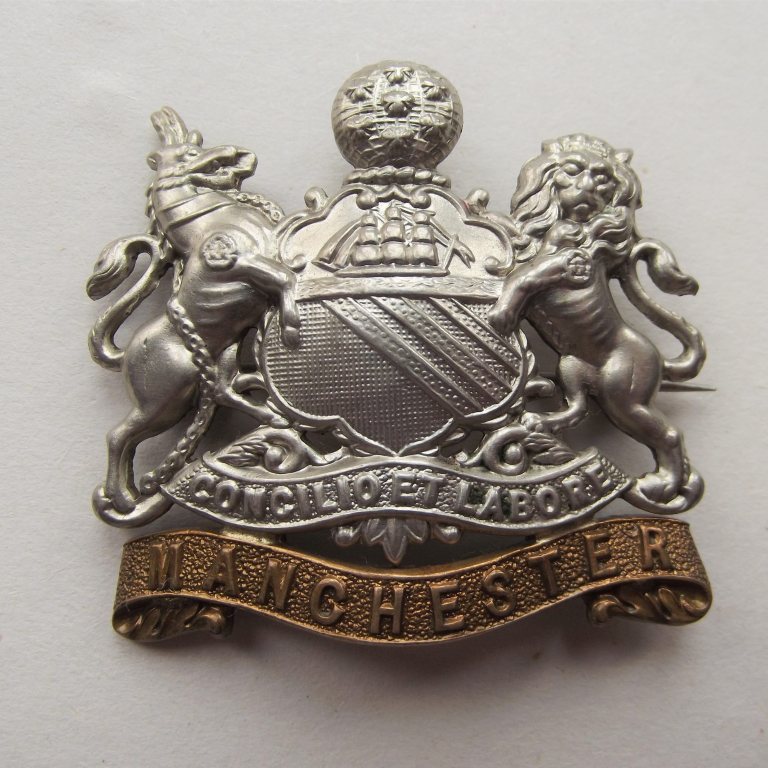
He was commissioned into the 3rd Volunteer Battalion Manchester Regiment on April 7, 1906 and the following year, on June 4, 1907, he married Winifred Elsie Mallalieu at Delph. After the Haldon reforms, he transferred to the 9th Battalion Manchester Regiment maintaining his rank and seniority when the Battalion was formed on April 1, 1908. On May 29, 1910 his first son, Reginald Hamer, was born. In April 1911 he was appointed scout officer to the East Lancs. Infantry Brigade and on December 7 that same year he was promoted to Captain, and assigned the command of F Company. His youngest son, Frank Mallalieu Hamer was born on September 17, 1913.
He sailed with the Battalion to Egypt in September 1914 and served with them there throughout their training and preparation for action. While in Egypt he was able to take 10 days leave from December 10-24 along with Capt. Howorth. After he returned from leave he was able to briefly meet his older brother Joseph Hamer who had joined the 5th Battalion, Australian Imperial Force on December 21, 1914, arriving in Egypt in February 1915.
After the attempted invasion of Egypt by the Turks, he was appointed second-in-command of the Turkish Prisoners’ Camp at El-Maadi. He was highly commended for his work there and was subsequently promoted to the rank of Adjutant and Quartermaster of the Camp, which by that time was accommodating about 2,000 prisoners. When the 9th Battalion was ordered to the Dardanelles he made several applications for permission to rejoin his battalion, which was finally granted and he rejoined at Port Said at 11:30pm on May 3. Upon landing in Gallipoli he was the Officer Commanding “C” Company.
Captain Frank Hamer was killed in action on the evening of June 7, 1915 leading a charge against a Turkish trench. Captain Hamer was shot and fell before reaching the trench. C Company subsequently captured the trench but were forced to relinquish it at dawn after holding it for around six hours. It was one of the bloodiest events of the Gallipoli campaign for the 1/9th Manchesters. In late September 1915, information was received by his father, William Hamer, that Captain Hamer’s body had been found and given a Christian burial with military honours and a cross placed over the grave.
Captain Frank Hamer was 35 years old. He is commemorated on the Helles Memorial.
He is also commemorated on:
- Ashton-Under-Lyne Civic Memorial.
- Manchester Grammar School Memorial.
The museum of the Manchester Regiment holds a small brass plaque that was originally positioned in Ashton Town Hall where Frank Hamer had been a pre-war town councilor. The plaque reads:
To the memory of Captain Frank Hamer, age 35 years. 9th Manchesters. A member of this Council. Killed in action at Gallipoli on 7 June 1915. Son of William Hamer J.P. of Birch House, Ashton-under-Lyne.
Councilor Henry Thomas Greenwood, the father of Lieut. William Gilbert Greenwood, was subsequently appointed as Overseer of the Poor in Ashton-under-Lyne to fill the vacancy created by Frank Hamer’s death.
An officer’s death gratuity, payable to his widow, was defined under article 497 of the Royal Warrant for Pay, 1914. This entitled his dependents to 124 days of field pay for his partial year of service (presumably starting from May 9, 1915). For Captain Hamer this worked out to be £77 and 10 shillings based upon his daily pay of 12 shillings and 6d. From this was subtracted his pay for June 8-30th equaling £14, 7 shillings and 6d leaving a net amount of £63, 2 shillings and 6d. And credits of £11, 5 shillings and 6d for field allowances earned but not paid resulted in a total paid to his widow of £74 and 8 shillings.
Additionally, his widow received a £250 gratuity and a pension of £100 per year. Each of his children received a gratuity of £83, 6 shillings and 8 pence and a “compassionate allowance” of £24 per year.
Further Family Tragedy
Frank Hamer’s younger brother Temporary 2nd Lieutenant (Acting Captain) Samuel Hamer, 26th Battalion, Northumberland Fusiliers was killed in action on April 14, 1917. He was buried at Bailleul Road East Cemetery, Saint-Laurent-Blangy, France.
Frank Hamer’s older brother Pte. Joseph Hamer, Australian Imperial Force, after surviving Gallipoli, was killed in action in France on September 1, 1918. He was buried at Assevillers New British Cemetery, France and is commemorated on the Australian War Memorial, Canberra.
References & Acknowledgements:
Manchester Grammar School Magazine, (ULULA) July 1915 Pg. 134.