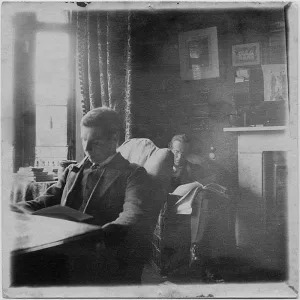
Christmas 1914

The following was published in the Saturday January 9, 1915 edition of the Ashton Reporter:

ASHTON TERRITORIALS’ CHRISTMAS DINNER IN CAIRO

Christmas Dinner 1914 Kasr-el-Nil Barracks

Above is a snapshot of the Ashton Territorials at their Christmas dinner in the Barracks, Abbassia, Cairo. The dinner took place in the Barracks Square. The photograph was taken by Lieutenant Forshaw, who kindly sends it to us to be published in the “Reporter”, with the permission of Lieut.-Colonel D. H. Wade, the commanding officer. Lieut. Forshaw assures us that the men of the Ashton Battalion in Cairo are quite contented and says he believes the Battalion “is the best fed and most healthy battalion in Egypt.”

LETTER FROM COLONEL WADE

The Mayoress of Ashton, Mrs. C. R. Wainwright, has received a letter from Lieut.-Colonel D. H. Wade, commanding officer of the 9th (Ashton) Battalion Manchester Regiment Territorials in Cairo, in acknowledgement of her kindness in instituting a fund for the provision of a Christmas treat for the Territorials. The letter is as follows: –

9th Batt. Manchester Regt.
Kasr-el-Nil Barracks, Cairo
27th December, 1914

To the Mayoress of Ashton-under-Lyne

Dear madam, – I am requested by the N.C.O.s and men of the 9th Battalion the Manchester Regiment to ask you to accept their most hearty thanks for your very great kindness in collecting and sending the Christmas fund, which enabled me to give the N.C.O.s and men a first rate Christmas dinner of beef, turkey, plum pudding, fruit, etc. on Christmas Day. The tables were laid in the Barracks Square, and I hope to send you by this mail or the next a photograph of the men taken when the dinner was almost finished, and another when they were giving three rousing cheers for the Colonel and the kind people of Ashton who contributed to the fund, and to whom all are extremely grateful.

It would have done you good to hear the men’s expressions of gratitude on every hand, and the resounding cheers which they gave for you and His Worship the Mayor at the close of their much enjoyed feast.

Please accept yourself, and convey to the donors, the sincere thanks of myself and the officers for the generous gift to the battalion I have the honour to command.

Yours Sincerely
D. H. Wade, Lieut.-Col.
Commanding 9th Batt. Manchester Regt.

A BANDSMAN AND THE CHRISTMAS TREAT

A brief account of the doings of the Territorials during the Christmas festivities is contained in a letter received by Mr. William Adams, builder and property repairer, Smallshaw, from his son Bandsman William Adams, who is stationed with the battalion. He writes: –

“Many thanks for the Christmas presents. I am pleased to say we have had a pretty good Christmas taking it all through. On the Wednesday before Christmas we went on parade at one o’clock in the afternoon, and marched about 10 miles, followed by tea on the desert, after which we got down for the night. It gets very cold here at night. We have had several night marches until about midnight. Christmas Eve was like an ordinary night, but on Christmas morning about 6am our band formed no the Barrack Square, and played the Christmas Hymn, which was appreciated by all the men. We had dinner altogether on the Barracks Square, and a fine time it was, as we had turkey, roast beef, potatoes, sausages, Christmas puddings, fruit and minerals. So you see we had a fine spread after all. Our photographs were taken as we sat at the tables. The band played whilst the men were having their dinner. On Boxing Day sports were held for the troops in Cairo, so I played with the band there all day. Last Sunday I went into a large Mohammedan mosque, and it was fine. Whilst out on one of the night parades we saw a star which looked almost like an electric light. It was described as the “Star of Bethlehem”. It was the sight of a lifetime. We have seen many fine sights including the Pyramids and Sphinx and many of the great buildings and curiosities.”

THE DINNER WAS GRAND

Private William Collier of Wimpole Street, Ashton, who is one of the 9th Manchesters writes from Cairo: –

“We had a fine Christmas here. The dinner was grand. I am having the time of my life. There are some sports here today (Boxing Day) and “Ti” Cropper has entered for the 100 yards race. “Ti” Cropper is a corporal now. Talk about the army being “rotten”, I am not sorry that I joined the Territorials. We have been having a hard time with the training, but we finish with it next week and then it will be O.K.”

Impressions of Egypt

The following articles were published in the Saturday October 17, 1914 edition of the Ashton Reporter:

TERRITORIAL’S LIFE IN CAIRO

The Ashton Territorials who have gone on service in Egypt are having the time of their lives. They are in Cairo, and an Ashton private writes that “it makes him laugh to think how the poor chaps are running round in the mills in Ashton, and cursing the bad spinning, while he himself, amid the brilliant sunshine and gay scenes, scarcely knows how to pass the hours of the day”. The fresh air out there, he adds, is making a man of him.

GOT THE LAUGH OF MILL HANDS

An interesting letter has been received from Private D. Thorpe, descriptive of the enjoyable life of the Territorials in Egypt. Writing to a Stalybridge friend, he says: –

“I am pleased to write to you once again, now that we have arrived at our destination, which is a grand place. The people here seem queer to us, but, of course, they are a different class of people altogether to us. I wish you could have come with us, as it would have suited you to see these people in the streets. The sun is scorching all through the day, and we are almost like blacks now, and they call it winter, so I don’t know what it is going to be like in summer.

The barracks that we are in is a large one, having four wings to it. We have nothing to grumble about. The buildings are simply grand out here; everything seems new, and there is no smoke in the air like there is at home. We can get English papers, but they cost us twice as much. The thing that is puzzling us most is the money, the commonest coin being a piastre, which is 2½d. in our money. I will bring some of these coins home with me, and then you will be able to see what they are like.

We have all been provided with light suits and helmets, and we had plenty of fun out of them when we put them on for the first time. We have not been allowed out of barracks yet, but we are expecting being free soon, and then we shall be able to see the sights and habits of Egypt better. We have seen three funerals since we arrived here, and they looked more like picnic parties, for the mourners ride on donkeys, and they all seem to be laughing and singing, whilst two of them carry the coffin. There are scores of camels passing in the streets with loads on their backs, and it does not seem strange to see them now, as it did at the first. The river Nile runs past one side of the barracks, and it is a grand sight to see the boats floating up and down. The houses around here are all surrounded with trees, and the streets are wide and clean. There are plenty of white people here, but most of those are French. The railway that we traveled on from Alexandria to Cairo was a treat, as we went through several streets on the journey, and we could almost touch the walls of the houses with our hands.

We have done very little work up to now; in fact, it made blisters come on my hands when I cut some bread, so you can tell how soft they are getting through want of use.

This fresh air is making a man of me, and I feel different altogether to what I did when I was shut up all the day in the mill. If you are working full time, you are welcome to it, for I am not ready for it yet, as I am quite satisfied with my present job, and it makes me laugh to think how you poor chaps are running round and cursing the bad spinning, whilst I don’t know how to pass the hours of the day over. When you write back to me just let me know how Hurst is going on this season, as I should like to know, for I have missed them very much, and I should like to get back in time to see them play a game or two before the close of the season.”

The following three articles were published in the Ashton reporter during October 1914:

An Ashton Corporal’s Letter

Corporal W. H. Martin of “A” Company, Ashton Territorials, in a letter describing Cairo, says: –

“Although the country cannot compare with English scenery for beauty, the complete change appeared nice to us. You could imagine that you had dropped back into Bible times. It is nothing fresh to see oxen drawing rough carts and ploughing with ancient wooden ploughs, and to see men riding on asses. They are a lazy lot, the men, and leave all the work for the women to do. The better class women wear veils over their faces and a wooden contrivance of some sort over their noses. They look queer, I can tell you. One of the funniest things I have seen is a native funeral. There are professional mourners, and these accompany the funeral dancing and singing and throwing their bodies into all sorts of funny contortions. The corpse is carried on the shoulders of four fellows, who knock it about and dance and run with it as if it were a bundle of old rags. The city of Cairo is a fine place, and contains some the finest buildings I have ever seen. I have seen two of the seven wonders of the world, that is the Pyramids and the River Nile. We are living on the banks of the Nile. It is supposed to be coming winter here, but it is very hot. We have had a cotton suit and helmet issued to us, and even then it is hot. Of course it is not unbearable, and the climate seems to suit me, as I have been in the best of health since I came.”

Some Set to Guard Railways

Private J. Swindels, who was employed at the “Reporter” Office, writing home on September 28th says: –

“Dear all of you – We landed at Alexandria on Friday morning and stayed till Sunday. We had a time; little beggars diving in the water for money. The barracks here is very large, but there are only 2,000 in. It is on the banks of the Nile, with date trees alongside. We can see a large part of Cairo, which is a fine city. There are lights all through the night. The natives walk about with very baggy trousers and some with long cloaks. The women have veils over their face, and something over their noses. They talk as if they were going to eat you in their own language; they also move their hands and arms about a lot. We can see the pyramids from the top of the barracks. We have got our helmets and light suits; they look very smart. They are sending some of our lot guarding railways up and down Egypt.”

CAPTURED A SPY

Private J. W. Chatburn, of Dukinfield, writing from Cairo says: –

“I am one of the 50 men picked out of the battalion for guarding the largest wireless station in the world, about 40 miles from Cairo. There are plenty of camels, monkeys, jackals, and lots of wild animals, and during the night, whilst on guard, you can hear all kinds of noises. We are divided into two sections, that makes us on guard every other night. I had the pleasure of capturing a German spy, and escorted him to the consul in Cairo. He was a fine man about six foot. When I first saw him he was drawing the plane of the wireless station, which I found on him. When searched he also had with him a khaki suit and a black soft hat. He said he was looking for work. They knew him at Cairo and he was wanted for another case of importance.”

The following was published in the Saturday November 7, 1914 edition of the Ashton Reporter:

ASHTON TERRITORIALS IN EGYPT

Cairo 200 Miles from the Turkish Frontier

OUR LADS “READY FOR ANY FUN OR DANGER”

Graphic Description of Life in Cairo

Much additional interest has now been attracted to the Ashton Territorials stationed in Cairo by the news of the threatened invasion of Egypt by Turkey, who seems determined to persist in her attack upon England and Russia. Egypt has been put under martial law. Cairo is about 200 miles from the Turkish frontier and the Turks would have to cross a waterless desert in Sinai of nearly 150 miles before their effectiveness could be realized. Even should they reach the Suez Canal they would find warships and a large contingent of troops to block their way. The Ashton Territorials, in the words of Lieutenant FA Makin, whose letter is given below, are ready for any fun or danger. Everyone is confident they will perform bravely and enthusiastically whatever duty they may be called upon to fulfill. A telegram to the London Times from Cairo last Saturday states: –

“Cairo had an opportunity today of seeing at close quarters the British Territorial troops when the strongest force of all arms seen for many years paraded the city. This display was magnificent and in every way splendid. The bearing of the men was a veritable revelation and aroused the enthusiasm of the crowds. The manner in which the Territorial troops have come on in such a short time carries the conviction that they will be a most serviceable force and reflects the greatest credit of the staff.”

PICTURES IN CAIRO

The Ashton Territorials at Work and at Play

LETTER FROM LIEUT. MAKIN

High Spirited Lads Ready for Fun or Danger

A graphic description of the life of the Ashton Territorials in Cairo is given in a letter sent home by Lieut. F. A. Makin. Writing from Kasr-el-Nil Barracks he says: –

Kasr-el-Nil Barracks, Cairo

October 7th, 1914

“We don’t get much time out of Barracks, just a little at night after “mess”. The only entertainments available are the elaborately decorated picture shows. Sunday is the only day we can get out together, so last Sunday Handforth, Shaw and I went over to see the pyramid and the wonderful tombs revealed by recent excavations. It is wonderful how ancient builders could bring and raise such huge stones and cement them together as closely as we do the finest tiles. Many of these large blocks are twelve feet long by four feet six wide. They say this pyramid was originally covered at the top with alabaster smooth as glass but some dogs removed this to build a mosque. You may now climb to the top up huge steps which form the sides. The outer coating must have taken ten years to put on. We did not attempt to climb far; you are safest accompanied by a guide. So we must come again. We can come near here by car and then you may have a donkey or a camel for a ride of five minutes for 2s. Those of us who had the camels out had the donkeys returning. I rather liked the camel ride. We saw a poor lad removed on a stretcher. He had ventured up the pyramid without guide and had a nasty fall. We don’t know how he got on, he was not a 9th man. The moonlight nights here are wonderful, you can read a paper by this light; the sunsets are most gorgeous, impossible to be pictured.”

October 12th, 1914

“They show us where Moses was hidden by the river. I hope insects were less troublesome than they are now. Every bite raises a lump with a red ring round which itches fearfully and even bleeds a little. I have escaped better than some whose faces are covered with bites. Eggs here are very small “Egyptian”, it takes four to make a decent omelette. I think the natives would drop if they saw some of our eggs at home. We have roast chicken and turkey for lunch. We cut our own when we can. First the carver gives the bird a thrilling sounding smack with the side of the knife but the chicken moves not. If you desire to get your teeth in you must get a bit of breast. I have seen turkeys driven through Cairo by a native with a long stick. I think they feed them on chunks of pyramid.

The river is deep today. This afternoon a boat with a few natives was making way up the stream and failed to lower sail soon enough to escape the bridge. They capsized. Some of our men got out a boat but were unable to help. Two came ashore lower down. I don’t know how the others fared.

On Saturday we marched through the town. It was too early for Cairo people. They go to bed late. Hotels close 2am and house pictures 9:30pm to 12.”

October 13th, 1914

“I begin to like this place better. From 5 to 11pm yesterday we had a route march. We crossed the bridge by the barracks and round an island which at this point divides the river for a short distance into a course on each side of it. Here we got a good illustration of the wonderful fertility of Egypt, wherever there is water supply. Palm trees higher than our garden flag pole, dates growing right on the top. In luxuriant gardens right and left of the roads are beautiful villas no two alike, mostly cream-coloured. At night these are brilliantly lighted, mostly by electricity. By moonlight we are reminded of beautiful fascinating story book pictures. I think land and building material is cheap, I know labour is. There is much building in progress in the suburbs. On one job today I saw a native workman on a scaffold fast asleep with his tools in his hands. I have a native groom for a week who turns his horse out like silk and is very smart at remedies for horse ailments. This afternoon we had a half-holiday and George Handforth and I went on horseback to old Cairo. I consider that the life they had there must be just the same as when Peter, James and John mended nets. We must go again with a camera. All manner of shops about 12ft by 9ft, quite open to the street. It was funny to watch a barber shave a customer who kept his red fez, and both standing. Furniture removals seemed common and could easily be done at half-an-hour’s notice. Some carried their furniture on a donkey, others on a camel. When my horse first saw a camel he carried on shamefully and I had to teach him that the camel was harmless by leading him to see and patting the neck of each. You see the horses don’t know they came to Egypt and at first they were wondering what’s gone wrong with Stalybridge, where they came from. He is however getting more accustomed and now when he meets this curious animal he snorts in the air as if to say “Oh, you are only a blooming camel”. I was surprised today to learn that Sir George Kemp and Captain Griffiths are in Cairo, which reminds me of experiences in South Africa, and incidentally is an illustration that “the war is a little place”. I don’t think there is the least chance of our leaving here until the war is over. We hear lots of rumours being to which I take no heed. This is the position: We are 1,500 and have taken the place of 8,000 regulars and will make a brave show in the face of a possible outbreak by Turkey. And we are the 9th Manchesters, this settles the matter.

It is now dark by 5:30pm but pleasantly warm in the evening. Tonight our band plays for [illegible] and very well they play. They meet for practice twice daily and also have marches on their own through Cairo.

Our Ashton lads have made fine soldiers; we find none “fall out” by the way. They get along and stick it. They are a credit to their town and are high spirited and ready for fun or danger. They soon became accustomed to Egyptian coinage and when they get some can sometimes be seen in carriages or on donkeys until the “piastres” cease from troubling. They are a sober and steady lot and must be in by 9pm.”

October 16th, 1914

“This afternoon I took Chorlton Shaw for a riding lesson. A brother officer took a snapshot of us. If it comes out alright I will send you a print and entitle it “Two ‘Knuts’ from Ashton out for a ride in Egypt”.

This morning three of us went an errand to the Citadel and were in time to hear the 12 o’ clock gun fired. We got TG Hyde to attempt a snapshot of this and as he peered into the finder the gun roared, and up went Tommy’s arm but he says he got it, but I think the result will be all sky. The view of Cairo and neighbourhoods from the Citadel is splendid. We see the towers and domes of many mosques and the pyramids in the distance.”

October 19th, 1914

“We paid our second visit to the great pyramid and this time explored the interior. I well remember the lectures we had in the old days on the subject in Berkeley Street Mission Room and the chart which hung up on the wall, and when I was slipping and stumbling along the dark passages I seemed to know my way. The place was fearfully hot. Two Arabs took us by the hand and though we are bent double they warn us to mind our head, and we must or we give ourselves a whack. Our guides are barefoot so they do not slip on the smooth stones as we do with boots on. Here and there in the passages in the King’s chamber and in the Queen’s chamber they light a piece of magnesium wire and charge [illegible] a time. Some Americans tried to ventilate the passages with air shafts but it does not seem to have been a success.”

The following was published in the Saturday December 26, 1914 edition of the Ashton Reporter:

An Ashton Lance Corporal’s Letter

Writing from the Kasr-el-Nil Barracks, Cairo to his parents, Mr. And Mrs. J. Q. Massey, Whiteland Road, Ashton. Lance-Corporal Gerald Massey of the 9th (Ashton) Battalion, Manchester Regiment Territorials makes reference to several interesting incidents. Referring to the designs of the Turks upon Egypt, he writes: –

“Talking about the Turks they are no good. If they ever reach the Suez they will have to encounter a lot of Indian troops, and if they succeed in breaking through they would be faced with about 150 miles of desert. Formerly there were wells every few miles, but these have been destroyed, and they would not get a body of troops across”

Referring to the local football clubs he writes: –

“I could not have heard anything better than Hurst having licked Denton, because there are a lot of Denton men in our mess. The other day we went for a route march in the desert. As we marched we saw human skulls and bones. The people do not seem to care where they bury their dead, and these are the remains of those who were buried years ago. It would make you laugh to see them delivering milk. Instead of taking the milk round in a vehicle, they take the cows round and milk them at the door of the customer.”

“It is winter here, and the natives are going about with overcoats, just like Christmas at home, only it is hotter than one of our warmest summer days. We have had our first rain since we came, and it only lasted five minutes. While it lasted it looked like Ashton is on a November morning when it is cold and wet.”

“The women out here are not like some of ours who are always talking. They cover up their mouths with a cloth, which looks as if it was intended to stop them from talking. The Territorials are now in splendid condition. If you saw them now you would hardly know them, they are so sunburnt.”

A Dukinfield Private’s Letter

Private S. Newton, son of Councillor J. T. Newton, Dukinfield, writing home from Cairo on December 2nd, says: “Last week we went to Abbassia for firing practice and it was a nice range. We were under canvas in the desert. The tents are known as the duplex. They are really two tents made into one, but one is so small, and so leaves a space of about a foot, which renders them rainproof. It rained very heavy one night and they stood the test. There were ten of us in one tent, all good mates. The tents are lined with yellow satin and looked very nice. Abbassia is a military town on the border of the desert. There are lots of fine barracks to accommodate thousands of troops. On one side there are a lot of huge Whitworth guns. Among the troops stationed here are some tea planters from Ceylon. Whilst at Abbassia I did my first guard. I went on all right and was not at all nervous as I had ten rounds and remembered that I was serving my King and country. It was a moonless night and very dark. I was on from 1:30 to 3:30.”

Writing on December 4th from Cairo Young Men’s Christian Association, Private Newton says:

“Yesterday we received the “Reporter” dated 14th November. It was very interesting. The weather here at present is a lot cooler. Today we did not parade until six o’ clock when we fell in with greatcoats and mess tins for training in night work in the desert. Yesterday, they issued some new kit and I got two shirts. They are very good ones and have been made by the Ladies in England. They are all one colour, army grey. Several men are leaving here for home shortly, including one in our mess named Ben Shaw who has strained his back. As to the marching, I have never been so exhausted since we came out to Egypt.  We always make the best of it. Only a week ago I saw the adjutant give his boots to one of our privates who had bad feet. On Friday we spent the night in the desert.”

Voyage to Egypt

The following two articles were published in the September 12, 1914 edition of the Ashton Reporter:

THE SCENES ON BOARD THE TROOPSHIP

Men Splendidly Provided for and Food Excellent

We received the following communication too late for insertion in our last issue.

We have made arrangements for receiving reports from time to time of the Ashton Territorials while they are abroad

“The Aragon” Southampton Dock, Sept 10th

Yesterday all preparations were made for the Battalion to move off. Reveille sounded at 4:30am or half-an-hour before its usual time. This was probably intended to act as a narcotic during the long, tedious journey that was to be made to Southampton in the afternoon. During the morning the men paraded for final inspection and after piling arms and stripping off equipment they left the parade ground. Suddenly the weather, which had been uncommonly promising, began to blacken into a thunderstorm and in a very short time a drenching shower followed. All the rifles and equipment were thoroughly soaked, and though it is true the sun did afterwards shine shyly, yet this respite was only followed by a much heavier shower, and when the men paraded at 4:15pm their rifles had to be thoroughly cleaned by oily rag and hard rubbing. The equipment was well beyond easy drying and this made another burden for the men to carry.

Throughout the afternoon visitors from Ashton were arriving both by train and car, and in spite of the muddy state of the camp and the murky appearance of the interior of the tents, the friends and relatives were made agreeably welcome and a spirit of home life pervaded the whole camp.

At 6pm, preceded by the band playing the liveliest airs modern music can offer, the right half of battalion, companies A, B, C and D marched down to Bury carrying rifles, equipment, great coats and also their well packed kit bags. They had a magnificent reception, all the route being lined by townspeople and visitors, sometimes to the extent of three deep. Small Union Jacks were waved from many of the windows, and hearty cheers were given for the men of Ashton as they took the first step on a long journey.

At Bury Station the men were comfortably seated in a long transport train of twenty-one carriages. There were only six men allowed to enter one compartment, so that traveling comfort was ensured. The remaining half of the battalion followed an hour later.

The railway journey was long but far from unpleasant, the scenery passed being enjoyed.

At 8am the train steamed into Southampton Dock Station. The kits were collected and carried on board the Aragon, which is an RMPS boat on Anglo-South American service. The County of London Yeomanry, the RAMC and the Royal Engineers of East Lancashire, besides 1,000 of the 9th are here.

The boat is expected to depart at 7 or 8 to-night for Egypt. The men are splendidly provided for, everything is new and spotlessly clean, the NCOs being in the 2nd class quarters and sleep in bunks. Food is excellent. Dinner – roast mutton, baked potatoes and good stew. Tea – bread, butter, cheese and pickles and tea. All contented; men in hammocks and allowed to parade the deck. Weather was drizzling this morning but mild and calm.

THE EAST LANCASHIRE DIVISION

The East Lancashire Division of the Territorial Force on Wednesday left the camps at Bury, Littleborough and Turton to proceed to the station assigned to them overseas. About sixty special trains were required for the division which is made up of Headquarters, one squadron of the Duke of Lancaster’s Own Yeomanry, three Infantry Brigades (Manchester, Lancashire Fusiliers and East Lancashire), Headquarters Divisional Artillery, three Field Artillery Brigades, the Heavy Battery and Ammunition Column, Headquarters Divisional Engineers, two Field Companies Royal Engineers the Signal Company, the Divisional Train and three Field Ambulances. The personnel include 598 Officers and 18,077 men. There were also 5,600 horses, 36 15-pounder guns, 12 howitzers, 24 machine guns, 239 carts about 400 wagons and tons of baggage.

The Divisional Staff consists of Major General W. Douglas, CB, DSO commanding: Lieutenant-Colonel AW Tufnell, general staff officer; Captain Allan, deputy assistant adjutant and quartermaster general; and twelve officers who have been posted to the staff on mobilization.

A postcard received from a foreign service member of the Duke of Lancaster’s Yeomanry intimated that they were on Thursday night boarding a transport carrying 2,000 troops to Egypt.

JOLLY DECENT BOAT

The following was from one of the regiments – “Just a line before we sail. Here we are safely on board after a 12 hours’ journey. This is a jolly decent boat, and I think we shall be comfortable. We are the only infantry battalion on board, the rest being yeomanry and artillery, so we are really amongst the ‘Knuts’. They all seem jolly decent men and I think when we are shaken down we shall be a very happy party.” It was understood that the ship would first stop at Gibraltar.

The following article was published in the October 3, 1914 edition of the Ashton Reporter:

Life on Board the Aragon

Dukinfield Man’s Interesting Diary

Councilor J. Taylor Newton of 2 Lodge Lane, Dukinfield has received a letter from his son Samuel of the 9th Batt. (Ashton) Territorials, descriptive of his life on board ship during the voyage from Southampton to Egypt. The letter is as follows:

SS Aragon

Monday September 14

I am writing to you in expectation of being able to post the letter when we arrive at Gibraltar and hope to find you all in the best of health. I have been making notes every time I had a chance in a scrap book I happened to have, not being able to get any paper of any sort.

Friday: It is grand. I wakened up about five o’ clock and am told we left Southampton at 11:30 o’ clock. Feeling cold. I inquired if we were passing the North Pole. We slept in the mess rooms, slung in hammocks from the ceiling. They are very comfortable. We are allowed a white clean blanket which is very warm. Some slept on deck all night. There are about 50 washing places and plenty of drinking water and about four salt water baths. After dressing and stowing away hammock I went for a wash, feeling sniffy. I then went below and put on my sweater and slippers which come in very useful. Then I went on deck for a blow and I got it especially when I got to the nose of the ship. It nearly blew me down and I may say there is no dust in it. At 7:15 breakfast, which consisted of bread and butter, kippers and coffee. They were very large kippers and nobody enjoyed it better than me. We go nothing short. At 9 o’ clock we were on parade and were shown where to fall in, in case of fire, collision, etc. Then they dismissed us and I passed time on deck until 12 o’ clock when dinner was served. It consisted of soup, boiled beef, potatoes in jackets and bread. After dinner there was a medical inspection, mostly for cleanliness. To tea, at 5 o’ clock, we had jam and bread and butter. I forgot to mention that we have been stopped since 10:30 this morning off the coast of Cornwall. I have counted ten ships on one side of ours, including two dangerous looking men-of-war, and some containing troops and horses.

Saturday and Sunday: Two awful days. We were in the Bay of Biscay and everybody was seasick in all directions. The 9th are poor sailors. Today (Sunday) I was on guard. It was only a matter of being there but it did me good being on the higher decks. I had some plum pudding to dinner and it has not disagreed with me. We are only going very slow. Today we were told to discard our boots and socks as we are coming into warmer regions. The men-of-war are still hanging round and have been signaling by lights to us. I am feeling better now and hope there are better days in store. Guard duty is fine, two hours on and four off, which is spent in a small room with cosy seats in it and a piano on second top deck. We finish guard at 8 tomorrow morning.

Monday: Much calmer and warmer; feeling in the pink. We are getting near to Gibraltar and are expecting to arrive tomorrow. A man-of-war has just been signaling to us. Two horses of ours have died. The smell below is horrible and we only go down at meal times and bedtime. There is a canteen on board and it is very busy when open. Sometimes waiting an hour and then see it closed. There are about nine boats and men-of-war on the right of us still. There is a roll call every day. We get war news every day by wireless and it is posted up all over the ship on typewritten sheets, and by accounts we are getting rid of the Germans nicely. We have also heard what Churchill said and the death of the Hendon airman. They say the “boss” said we would have Christmas dinner at home and I hope it is right. There are on board, in addition to the 9thBattalion, some Duke of Lancaster’s Own, East Lancashires, Royal Army Medical Corps, East Lancashire Royal Engineers and a good number of yeomanry from London, amongst whom is Lord Howard de Walden. Four o’ clock we have just had a parade of ten minutes.

Tuesday: Last night we traveled with lights out as there was danger knocking about. I got up at reveille this morning which is six o’ clock. There were seven ships, all within a radius of half a mile, ours being the centre. It is champion sailing now. We are off the coast of Spain. This morning I was on duty scraping steps which lead to the mess rooms, also mopping them. I am now able to tell proper time of parades, etc. Six o’ clock reveille, 7-10 breakfast, 7-40 physical culture (which is too soon after a meal), 10 o’ clock roll call and inspection (or walk past of captain of the ship and battalion officers), 2-45 parade for rifle instruction, tea 5 o’ clock, 9-15 all lights out. I have been on deck for about 2 hours, viewing round. There are in sight 15 ships around us including two men-of-war. All look within a radius of a mile, two passing quite near to us with troops on board. We are also in sight of a light which gives out a bright light every four seconds. One ship sent out two rockets which send out sparks when they burst like those at Belle Vue. Today they came to vaccinate our company. It was not compulsory and lots refused including myself. They then tried to draw us in by means of a lecture but still many refused. One man said, “they’ve tried to mak’ us into soldiers, then sailors and now they’re trying to mak’ us into pin cushions”. Owing to this vaccination I have to go out of my turn for mess orderly which is shared with me on our table of 20 men. The duties include going to cookhouse for chuck, and to wash up. The sun is blazing hot and I feel as if I have had a Turkish bath. Today a sergeant told us that if we had any letters we must post them tonight. I am still well and hearty and eating like a horse and I hope you are all in best of health. A band is at present playing on deck. We hear we are stopping at Gibraltar until further orders. It may be many weeks before you hear from me again but I shall always endeavor to let you know of our travels as soon as possible.

Personal

Each edition of the Ashton Reporter had a small “Personal” column. Several of these columns contained very short (one or two sentences) of information regarding certain prominent people of the district including Officers of the 9th Battalion. Those entries, as they relate to the 9th Battalion Manchester Regiment, are provided here.

Personal

Saturday, January 3, 1912:

Lieutenant J. A. Dearden, of the 2nd Battalion Manchester Regiment, now at Curragh Camp, Ireland, has been appointed to succeed Captain Minogue as adjutant of the 9th Battalion Manchester Regiment (Ashton Territorials), and will take up his duties in March.

Saturday, September 5, 1914:

Captain R. Lees, who underwent an operation at the Ashton District Infirmary last week, was removed from that institution to his home, Trafalgar Square, on Wednesday. He is progressing satisfactorily.

The following promotions appeared in the London Gazette this week: 9th Batt. Manchester Reg. – Sec. Lieut. H. C. Shaw to be Lieut. (Sept 2). The following to be Sec. Lieuts. :- W. H. Lillie, O. J. Sutton, H. G. Shatwell, J. M. Wade, J. S. Marsden (to be superny.) (Sept 2). Lieut. Shaw is a son of the Mayor of Ashton.

Several changes to the personnel of the Ashton Battalion Territorials is contemplated. As Major E. Garside will, it is expected, be detailed for home duty , and will not proceed on foreign service, it is understood that Captain Nowell will be promoted to Major, and Lieutenant Kershaw to Captain. Mr. A. E. Stringer, B.Sc., science master at the Ashton Secondary School, has joined the battalion as second lieutenant, and he, along with Captain Nowell, who has been in command of the depot at Ashton, will leave today (Saturday) in order to join the battalion at Bury.

Saturday, September 12, 1914:

Lieut. Birchenall has been deputed to take temporary charge of the depot of the 9th Battalion Manchester Regiment, Territorials, at the Armoury, Old-street, Ashton, until Captain R. Lees is sufficiently restored to health to be able to take over the duties. Both volunteered for foreign service with the battalion.

Saturday, September 19, 1914:

The following appeared on Tuesday in the “London Gazette” : 9th Battalion the Manchester Regiment – Major J. Broadbent, retired list, late of this battalion, to be second lieutenant.

Saturday, October 3, 1914:

Sergeant F. Jones who is now with the Ashton Territorials in Egypt, has been gazetted a second lieutenant dated September 30th.

Lieutenant D B Stevenson has returned to Ashton from St. Anne’s, where he had been recouperating after an attack of pneumonia which prevented him from going out to Egypt with the 9th Battalion Manchester Regiment (Territorials). He has again volunteered for foreign service.

Captain R. Lees is at present at Blackpool recouperating and progressing favourably. When encamped at Bury with the Ashton Battalion Captain Lees was compelled to return to Ashton to undergo an operation at the Infirmary. He has again volunteered for foreign service.

Saturday, October 17, 1914:

Captain Ralph Lees is sufficiently restored to health to be able to take up duties in command of the depot of the 9th Battalion Manchester Regiment, Territorials, at the Ashton Armoury.

Saturday, March 13, 1915:

Captain Ralph Lees, who paid a visit to the depot of the 9th Batt. Manchester Regiment Territorials, at Ashton Armoury, last week end, has been acting as adjutant and instructor of musketry since his removal to Southport a few weeks ago.

Saturday, April 3, 1915:

Sergt.-Major Holt, instructor of the 9 (Ashton) Batt. Manchester Regiment, Territorials of Alexandra-street, Ashton, has returned invalided from Egypt, and is receiving treatment at the Whitworth-street Hospital, Manchester. Serg Major Holt has served 28 years in the Army. His son, Lance-corpl. Holt, left with the 2nd Manchesters for the front on August 4th. He has been wounded in the knee by a bullet, but is again in active service.

Saturday, July 31, 1915:

Lieutenant Arthur Connery in a letter to his brother QMS J. T. Connery from Malta, says that he is getting on favourably. His mouth has regained the normal aspect, and the pieces of broken teeth have been extracted by the military dentist. He is to come home by the next transport.

Lieutenant F. A. Makin, of the 1/9th Ashton Territorials, has so far recovered from a serious attack of enteric for him to write letters to his friends at home. In the one dated July 18th he states that the doctor has pronounced him convalescent. It is now the eighth week since his admission into the Deaconess Hospital, Alexandria, Egypt.

Saturday, August 7, 1915:

Quartermaster Sergeant Boocock 1/9th Battalion Manchester Regiment, Territorials of Katherine Street, Ashton has returned wounded from the Dardanelles and is at present under treatment at the Tabernacle Hospital, Southport. His son, Private Alfred Boocock of the same Battalion writes saying he has arrived at Malta on the way home.

Major E. Garside commanding the 3/9th Res. Battalion Manchester Regiment, Ashton Territorials, who are now in training at Southport was the adjudicator in a trench digging competition at the Botanic gardens on Saturday between wounded soldiers from the Homeopathic [Cottage] Hospital and Meols Hall [Convalescent Hospital]. The occasion was [illegible] garden party and the Mayor distributed the prizes.

Saturday, August 21, 1915:

Lieut. Col. D. H. Wade 1/9th Manchester Regt. (Ashton Territorials) who was wounded during the fighting on the Gallipoli Peninsula is still in the Whitworth Street Military Hospital, Manchester, and is making good progress.

Saturday, August 28, 1915:

Lieut. F. A. Makin. The Nest, Taunton Road, Ashton who has been laid up for eleven weeks with enteric at the Deaconess Hospital, Alexandria wired to his wife as follows: –

“Arrived 3rd London General Hospital, Wandsworth. Probably few days here.”

The telegram was received yesterday, Friday morning. Lieut. Makin is in the 1/9th Battalion Manchester Regiment (Ashton Territorials) and was taken ill while fighting at the Dardanelles.

Saturday, September 4, 1915:

Lieutenant R. G. Wood of the Ashton Territorials, whose leg was injured in an attempt to save a sergeant in the Oldham Territorials, is now in a military hospital in Torquay.

The late Lieutenat-Colonel Thomas Hethorn Cunliffe, of the Warren, Wood Road, Whalley Range Manchester, who was in command of the 2/9th Battalion Manchester Regiment, Ashton Territorials, and died suddenly in Summer, left unsettled property of the gross value of £3,234 with net penalties £1,463.

Saturday, September 18, 1915:

Captain Irvine Dearnaley and Lieutenant B. F. Robinson who joined the 2/9th Battalion Manchester Regiment, Ashton Territorials, at the end of last year, and have been with the Battalion at Pease Pottage Sussex, have this week been on a visit to Ashton. Both were looking remarkably well and fit. It is understood that Lieutenant Robinson is shortly going to the front.

Lieutenant R. G. Wood, son of Alderman and Mrs. R. Wood, of Stalybridge who was wounded in the Dardanelles while fighting with the 1/9th Battalion Manchester Regiment is still in the Stoodly Knowle Park hospital for wounded Officers at Torquay, where he is progressing favourably. On Friday of last week their Majesties the King and Queen visited the hospital and conversed with all the Officers, including Lieutenant Wood, and expressed the hope that they would have a speedy recovery.

Saturday, September 25, 1915:

Captain I. Dearnaley, who came home on a short furlough from his battalion, 2/9th Manchetser Territorals, returned to Tunbridge Wells on Tuesday.

Lieutenant Arthur Connery, who has come home wounded from the Dardanelles, has rejoined the 3/9th Battalion Manchester Regiment at Southport.

Lieut. W. M. Barratt, 1/9th Manchesters, who left England for the Dardanelles at the end of June has been invalided home suffering from gastritis. He is in hospital in London and progressing well.

Private W. Wilson, son of Mr. T. Wilson, the head park keeper at Stamford Park, who has been fighting with the Aston Territorials in the Dardanelles, is now in hospital at Chelsea. In the same hospital are several Ashton soldiers including Corpl. W. Martin, son of Mr. Martin, Sutherland Street.

Lieutenant Harold H. Knight, of the 1/9th Battalion Manchester Regiment, son of Mr. and Mrs. John W. Knight of Arncliffe, Henrietta Street, Ashton, has been invalided home from the Dardanelles with a severe attack of dysentery and is now in a London hospital. His condition was somewhat serious, but his parents, who have visited him, report that it is now favourable.

Mr. Joseph Walsh, licensee of the George and Dragon Hotel, Market Square, Ashton, has received notice from the War Office that his only son, Private Harold Walsh, 1/9th Manchester Regiment Ashton Territorials, has been slightly wounded in the Dardanelles. A week ago, Mr. Walsh received a postcard from his son intimating that he had been into the London and County Hospital, Epsom. Mr. Walsh journeyed to Epsom on receipt of the card, and found his son improving favourably, and in good spirits.

Saturday, October 2, 1915:

Lieut. And Quartermaster J. M. Connery, who has been invalided from the Dardanelles embarked for home on a hospital ship on Sept 16th.

Major Lees of the 5th Battalion Lancashire Fusiliers, Rochdale, is now acting as commanding officer of the 1/9th Battalion Manchester Regiment (Ashton Territorials) at the Dardanelles.

Lieut. W. M. Barratt, 1/9th Battalion Manchester Regiment, who has been invalided home from the Dardanelles suffering from gastritis, arrived at his home in Richmond Street, Ashton on Sunday after having been in a nursing home in London.

Lieut. Harold H. Knight, 1/9th Battalion Manchester Regiment, who arrived at a London hospital recently, having been invalided home with an attack of dysentery from the Dardanelles, is making satisfactory progress toward recovery.

Information has come to hand during the week to Mr. Wm. Hamer that the body of his son, Captain Frank Hamer, has been found. He was killed during the severe fighting in Gallipoli, and received a Christian burial with military honours and a cross has been placed over his grave. This will be a source of satisfaction and comfort to the family and friends.

Saturday, October 9, 1915:

Captain G. W. Handforth of the 1/9th Battalion Manchester Regiment has cabled to his family in Ashton that he is in care at Malta in hospital but his condition is not serious.

Sergeant T. Cropper of the Ashton Territorials, the former licensee of the King William Hotel, Stamford Street, Ashton is at Southampton suffering from dysentery.

Lieut. Colonel D. H. Wade commanded the Ashton Territorials who were present at the military funeral of Private S. Armitage at Hurst Cemetery on Thursday.

Captain T. Platt of the Ashton Territorials has arrived at his home in Newmarket Road, Waterloo, Ashton on sick leave. He is feeling much better for the rest, after his recent experiences at the Dardanelles.

Captain G. H. Okell was warmly welcomed by his many friends when he arrived at the Ashton Town Hall on Saturday with the Territorials who took part in the great recruiting demonstration. He expressed himself as much satisfied by the rest he has had.

Saturday, October 16, 1915:

Colour-Sergeant R. Jackson of the Ashton Territorials, is on his way home from the Dardanelles and is expected to arrive during the week ahead.

Major E. Garside, officer commanding the 3/9th Battalion, Manchester Regiment, now at Southport, was in Ashton last week on leave.

Captain J. A. Dearden, the adjutant of the 1/9th Battalion Manchester Regiment, is going out to the Dardanelles to rejoin the Ashton Territorials. Captain Dearden was invalided home from Egypt.

Captain R. Lees, O.C. Administrative Centre Ashton Territorials, has been granted 14 days sick leave and is going to the seaside to recuperate. During the recent recruiting rally Captain Lees worked strenuously and has overtaxed his energies.

Major M. H. Connery, of the Ashton Territorials in a letter just received, says he is quite fit and still hopeful that the 9th Manchesters may return before Christmas. Things were very quiet at the moment of writing.

Lieut. W. T. Forshaw, V.C., of the Ashton Territorials, who arrived on Tuesday at his home, Hillside, Fairfield Lane, Barrow-in-Furness, may pay a private visit to friends in Ashton prior to the conferring upon him of the Freedom of the Borough, which has been arranged for October 30.

On the arrival of Lieut. Forshaw at his home, Colonel Wainwright at once got in communication with him and definitely fixed up the date of the 30th October for the occasion of the conferment of the Freedom of the Borough.

Saturday, November 20, 1915:

Second Lieutenant Gilbert Greenwood, son of Councilor and Mrs. H. T. Greenwood of Haywood, Mossley Road, Ashton, has returned home from the Dardanelles owing to enteric fever. Second Lieutenant Greenwood joined the 2/9th Battalion Manchester Regiment last year and went out with a draft of the 2/9th Battalion.

Saturday, November 27, 1915:

Lieutenant Colonel D. H. Wade, is at present at Southport on light duty attached to the 3/9th Manchester Regiment.

Lieut. H. H. Knight, of the 1/9th Battalion Manchester Regiment, has returned to Ashton from Wales, where he has been recuperating after the severe attack of fever which led to his being invalided home from the Dardanelles.

Lieutenant William Thomas Forshaw, V.C., Ashton Territorials on Wednesday visited Lancaster where until recently before war broke out he had an appointment under the education authority. On Wednesday night he joined Mr. Aldous’ prize choir in a concert for the Mayoress’s Comforts Fund. Lieutenant Forshaw was cheered for each of his songs and was given an address from the Town Council.

Saturday, December 4, 1915:

Lieutenant T. G. Hyde, of the 1/9th Manchester Regiment, who has been invalided home, has been attached temporarily to the Administrative Centre at the Armoury, Ashton.

Lieutenant Colonel D. H. Wade, of the 1/9th Manchester Regiment, has been nominated as a military member of the East Lancashire Territorial Association … due to the retirement of Lt.-Col. C. R. Wainwright, D.L., T.D., J.P., Mayor of Ashton.

Saturday, December 11, 1915:

Captain G. W. Handforth, of the 1/9th Regiment has been granted another month’s leave.

Captain G. H. Okell is now at Southport with the 3/9th Manchester Regiment, who are on the point of removing to huts at Codford, Salisbury Plain.

Lieutenant A. Connery, of the 3/9th Battalion Manchester Regiment, visited Ashton on Wednesday, prior to proceeding from Southport to Aldershot with the Battalion.

Councilor H. T. Greenwood, on the motion of Alderman E. B. Heap, seconded by Councilor J. W. Pollit, was appointed at the meeting of the Ashton Town Council as an overseer of the poor, to fill the current vacancy caused by the death of Captain Frank Hamer.

Saturday, January 1, 1916:

Captain G. W. Handforth, of the Aston Territorials, who was invalided home some time ago, has now reported for duty, and has been passed for general service.

Saturday, January 8, 1916:

Lieutenant H. C. Shaw, (Ashton Territorials, son of the Deputy Mayor of Ashton, (Alderman H. Shaw), is in hospital at Oxford. He had been in hospital at Malta for some time.

Lieutenant R. G. Wood, of the Ashton Territorials, has returned to hospital at Manchester to undergo further treatment to his leg, which was injured at the Dardanelles.

Captain T. A. Platt, Lieutenant J. Broadbent, and Lieutenant S. Naylor, all of whom have been in the fighting in the Dardanelles with the Ashton Territorials, and have been home on sick leave, have rejoined the Ashton Territorials, 3/9th Battalion, who are training at Codford, Salisbury Plain.

Saturday, January 15, 1916:

Colonel D. H. Wade, of the 1/9 Manchester Regiment (Ashton Territorials) left his home in Manchester on Thursday to rejoin his battalion.

Lieutenant S. Ruttenau, who was invalided home from the Dardanelles, suffering from enteric fever, proceeded to Codford on Monday, to join the 3/9 Manchester Regiment. He was in charge of a contingent of Ashton Territorials who were returning after being on Christmas leave.

Lieut. H. C. Shaw, of the 1/9th Manchester Regiment, son of Alderman H. Shaw, J.P., Norton Villas, Ashton, is at present at home on sick leave. He accompanied the first batch of Ashton Territorials to the Dardanelles, and took part in some of the desperate fighting there. On Oct 7th he had an attack of malarial fever, and was taken to hospital at Malta, where he remained for a couple of months. Then he proceeded to Southampton, and later on to Oxford. Lieut. Shaw is much better in health now, and his condition is improving.

Saturday, February 5, 1916:

Lieutenant Harold Knight, of the 1/9th Manchester Regiment, who was invalided home from the Dardanelles through enteric fever, has returned to the 3/9th Manchester Regiment at Codford.

Lieutenant R. G. Wood, of the 1/9th Manchester Regiment, son of Alderman R. Wood, of Ridge Hill Lanes, Stalybridge, proceeded to Buckingham Palace on Thursday, and received his Military Cross from the hands of the King.

Captain G. W. Handforth, of the 1/9th Manchester Regiment, who was invalided home from the Dardanelles several months ago, and has been with the 3/9th Manchester Regiment at Codford, has been over at Ashton during the week, prior to going out with a draft of men.

Saturday, February 12, 1916:

Lieut. Naylor, of the 1/9 Manchester Regiment, paid a visit to Captain Ralph Lees at the Ashton Armoury during the week. He joined the 1/9 Battalion just before they went to Southport in November 1914. He was at the Dardanelles, where he lost the sight of his right eye.

Saturday, February 19, 1916:

Col. D. H. Wade, has arrived in Egypt. On January 27th he visited some of the Ashton men at the Mustapha Base, Alexandria, and had a short conversation with them before proceeding to join the rest of the battalion, who were then at Tel-el-Kebir.

Saturday, February 26, 1916:

Captain F. Woodhouse, of Marple, nephew of the Mayor of Ashton (Colonel C. R. Wainwright, D. L.) is back in England on a month’s leave. With the 1/9th Manchester Regiment he went through the campaign in Gallipoli, and is one of the very few officers who did not figure in the casualty lists.

The announcement appears in the “London Gazette” that Quartermaster-Sergeant J. T. Connery has been promoted to a second lieutenancy in the Manchester Regiment. This news has given great satisfaction to the many friends of Second-Lieutenant Connery in Ashton. In June last Second-Lieutenant J. T. Connery was mentioned in dispatches by Sir John French for gallant and distinguished services on the field, and recommended for a commission and decoration. Second-Lieutenant J. T. Connery is a son of Major H. H Connery, and quartermaster of the Ashton Territorials. All four sons of Major Connery have now commissions in the forces, and are doing good work. Second-Lieutenant Connery took part in the retreat from Mons with the 2nd Battalion Manchester Regiment.

Saturday, March 4, 1916:

Lieut. F. A. Makin, has been called to Codford (Salisbury Plain), and is specified for permanent home service, light duty (office work).

Captain G. Makin (Codford) has been promoted Brigade Musketry Officer, supervising officer for four battalions, 4/5th Lancashire Fusiliers.

Major Edward Garside, commanding the 3/9th Manchester Regiment, now at Codford, has been gazetted Lieut.-Colonel, with seniority set out in the cadres of the permanent establishment.

Saturday, March 18, 1916:

Colonel R. B. Nowell, is temporarily in command of the 3/9th Manchester Regiment (Ashton Territorials) at Codford, in the absence of Lieut.-Colonel Garside, who is at present engaged on other duties.

Saturday, March 25, 1916:

Lieut. T. G. Hyde, has been transferred from the Administrative Centre at the Armoury, Ashton, where he has been assisting Captain Ralph Lees, to the 3/9th Battalion at Codford. Lieut. Hyde was with the Ashton Territorials in Gallipoli, and was invalided home on account of illness.

A large framed photograph of the late Lieut. A. E. Stringer, of the 1/9th Manchester Regiment, who was killed in action on the Gallipoli Peninsula on June 7th last, has been presented to the Ashton Secondary School by Captain and Mrs. Ralph Lees. Before going on active service Lieut. Stringer was one of the masters at the school.

Saturday, April 1, 1916:

Captain T. A. Platt, of the Ashton Territorials, has been in Ashton during the week on battalion business.

Lieut.-Col. R. B. Nowell, of the Ashton Territorials, is now at his home in Handforth on sick leave, suffering from severe rheumatism.

Saturday, April 8, 1916:

Capt. G. H. Okell, of the Ashton Territorials, is now, we understand, acting as military representative at Sheffield Tribunal.

Lieut. J. Broadbent, Lieut. W. J. Ablitt, and a large draft of the 1/9th and a number of the 3/9th Manchester Regiment are on the way to join their old friends overseas.

Saturday, April 15, 1916:

Sergt. George Silvester, D.C.M., of the Ashton Territorials, has arrived at Whitchurch (Glam.) from Malta. He is making good progress towards recovery.

Saturday, April 22, 1916:

Lieutenant J. Broadbent, of the Ashton Territorials, who recently went out to Egypt with a draft, has arrived at his destination. He has sent a cablegram to this effect to his wife.

As the Armoury will be closed from Thursday night till Tuesday morning next, Captain Ralph Lees, the commanding officer of the administrative centre, will take a few days well-earned rest. He will spend his short holiday in North Lancashire.

Saturday, May 6, 1916:

Captain and Mrs. Ralph Lees have presented the Secondary School a fine framed photograph of the late Lieut. A. E. Stringer, and it has been hung in the school. Lieut. Stringer was killed in the Dardanelles on June 7th last year, after a brilliant bayonet charge. He was second master at the Ashton Secondary School. Captain Lees is a brother-in-law of Lieut. Stringer.

Saturday, June 10, 1916:

The teachers at Trafalgar Square School on Wednesday last placed a laurel wreath in the entrance hall of the school over the photograph of the late Lieutenant A. E. Stringer, B.Sc., to mark the anniversary of his death, June 7th, 1915.

Lieutenant R. G. Wood, 1/9th Battalion Manchester Regiment, son of Alderman R. Wood, of Stalybridge, was on Tuesday night presented with a framed photograph of himself by the past and present students of the Stalybridge Technical School, in recognition of his gallant deed at the Dardanelles in saving a comrade, for which he was awarded the Military Cross and the French Croix de Guerre. The portrait is to hang in the school as a memorial of him.

Saturday, July 8, 1916:

Richmond House Hospital as at present the care of two gallant winners of the D.C.M. Sergeant Langford, R. E., (wireless squadron), and Corporal Pickford, of the 1/9th Manchetsers, whose exploits in Gallipoli will be remembered.

Saturday, July 15, 1916:

Captain and Adjutant Dearden, who went out to Egypt with the 1/9th Battalion Manchester Regiment (T.F.), is now engaged in staff work at the War Office, London.

Saturday, July 29, 1916:

Capt. George Handforth, of the Ashton Territorials, has been made adjutant to the Battalion.

Major John Broadbent, of the 1/9th Manchester Regiment, has been awarded the Volunteer Decoration for long service. He has 20 years service to his credit.

Saturday, August 5, 1916:

Company Sergeant-Major A. Binns, 9th Manchesters, has returned from the East, and is progressing favourably at the Alexandra Park Hospital, Stockport.

Saturday, August 19, 1916:

Major E. Howorth and Lieut. H. H. Knight leave England on Monday to rejoin their battalion the 9th Manchesters (Ashton Territorials).

Saturday, September 2, 1916:

Major M. H. Connery, M.C., Quarter-Master of the 1/9th Ashton Territorials, was yesterday (Friday) decorated with the Military Cross at Windsor Castle by his Majesty the King.

Saturday, September 16, 1916:

Major M. H. Connery, M.C., (Ashton Territorials) is now undergoing special treatment at the Whitworth Street Military Hospital, Manchester, and is making satisfactory progress.

Saturday, October 7, 1916:

Col D. H. Wade has been elected a member of the Council of the Union of Lancashire and Cheshire Institutes for the year 1916-17.

The “London Gazette” states that Second-Lieut. Connery, son of Major M. H. Connery, M.C., is transferred from the Manchester Regt. (T.F.) to a lieutenancy in the Machine Gun Corps. Whilst in the Ashton Territorials in Gallipoli, Lieut. Connery was wounded in the face.

Saturday, October 21, 1916:

Regt. Q. M. S. Harry Stringer of the Ashton Territorials, and Mrs. Stringer, have been in Ashton this week, and have received the congratulations and good wishes of a large circle of friends.

Lieutenant W. M. Barratt, 9th Manchesters, who saw service in Gallipoli, is now in France, and attached to the 4th Loyal North Lancs. He is the first officer of the 9th to see service in Gallipoli and France.

Saturday, October 28, 1916:

Major Nowell, who was in command of the Ashton Territorials for a period on the Gallipoli Peninsula, sailed for Egypt last week.

Saturday, December 9, 1916:

Lieut.-Colonel D. H. Wade, of the Ashton Territorials, who has acted as temporary Brigadier-General, has been mentioned in despatches. An extract from a despatch received from General Sir Archibald Murray, Commander-in-Chief of the Egyptian Expeditionary Force, dealing with the smashing defeat inflicted on the Turks in their attack on the Suez Canal early in August, states that of the East Lancashire troops commanded by Major-General Sir W. Douglas, K.C.M.G., C.B., only two battalions were in action on the 4th (August), but the force carried out a march under very trying conditions on the subsequent days. Acting-Sergeant J. Horsfield, of the Territorials, whose home is in Elgin Street, Ashton, is also mentioned in despatches.

Saturday, February 24, 1917:

Lieutenant Gilbert Greenwood, son of Councilor H. T. Greenwood, is now reported to have arrived in France.

Lieutenant W. M. Barratt, of the Ashton Territorials, is over on leave from France, at his home in Richmond Street, Ashton.

Under the War Office Authority, dated February 9th. 1917, Lieutenant-Colonel Edward Garside, Mem. Inst. C.E.. the late commanding officer of the 9th (Res.) Battalion the Manchester Regiment, has been appointed permanent president of the Garrison Quartering Committee, Mersey Defences.

Saturday, March 3, 1917:
Amongst officers whose names have been brought to the notice of the Secretary of State for War for valuable services rendered in connection with the war is Lieutenant-Colonel Edward Garside, Mersey Defences.

Saturday, March 10, 1917:

Lieutenant Bertram Robinson, of the Ashton Territorials, is over in Ashton on leave from France.

Captain G. Makin, who recently left Ripon for Edinburgh, has now arrived in Egypt.

Saturday, March 17, 1917:

Lieut.-Colonel D. H. Wade and Ashton Territorials have now arrived in France.

Saturday, March 24, 1917:

Lieut. W. M. Barratt, 9th Manchesters, attached 18th Manchester Regiment, has been promoted captain from February 6th 1916. He is the eldest son of Mr. Herbert Barratt, Richmond Street, and married Gladys, the youngest daughter of Mr. and Mrs. J. T. Holderness, Heath Lea, Ashton. He served in Gallipoli with the 9th and went to France at the beginning of October 1916.

Saturday, April 14, 1917:

Lieut.-Colonel D. H. Wade, commanding officer of the 1/9th Battalion Manchester Regiment (Ashton Territorials), has been over from France on short leave, and has visited ,any of his friends and acquaintances in Ashton. He returned to France on Thursday.

Saturday, April 28, 1917:

Lieut. W. Ruttenau, of the Ashton Territorials, son of the principal of Messrs. Ruttenau and Co., leather, etc., manufacturers, Ashton, has been over this week from France on short leave.

C.Q.M.-Sergt. W. Eaton, of the Ashton Territorials, (a grandson of Alderman A. Shaw), is in Ashton this week, and will undergo training preparatory to taking up a commission.

Sergt.-Major Buckley, the crack shot of the 1/9th Battalion Manchester Regiment, whose name used to figure conspicuously in the prize lists before the war, is in England to undergo training for a commission.

Captain George Handforth, of the Ashton Territorials, who prior to the war was on the clerical staff of the Ashton Borough Education Committee, and has been out with the Territorials in Egypt and the Dardanelles, has been over on furlough from France.

Saturday, May 12, 1917:

Colonel D. H. Wade, commanding officer of the 1/9th Battalion Manchester Regiment, is now in hospital in Torquay.

Saturday, July 7, 1917:

Lieut.-Col. D. H. Wade, of the 1/9th Batt. Manchester Regiment, has been transferred to the Territorial Force Reserve, and has resumed his civil occupation of secretary of the Ashton Education Committee.

Saturday, July 14, 1917:

The name of Captain G. W. Handforth, 1/9th Batt. Manchester Regiment, appears in the list of officers mentioned by General Sir Archibald Murray in his despatch dealing with the Egyptian operations.

Saturday, July 28, 1917:

Major T. Egbert Howorth, 1/9th Manchester Regt., has arrived home from France on a few days’ leave. Major Howorth looks particularly fit, and will leave again for France on Tuesday.

Saturday, August 11, 1917:

Lieut. H. H. Knight (Ashton Territorials), son of Mr. and Mrs. J. W. Knight, Arncliffe, Henrietta Street, Hurst, has been over on short leave from France.

Saturday, August 25, 1917:

Company Commander F. A. Makin (Late Lieut. 9th Battalion Manchester Regiment, T.F.), has resigned his appointment with effect from July 1st in the 1st Battalion (Manchester) Lancashire Volunteer Regiment.

Saturday, September 15, 1917:

Lieut. W. L. Connery, a son of Major M. H. Connery, has been promoted to captain, dated July 1st. He is now at Cleethorpes.

Major M. H. Connery, M.C., who was some time ago appointed adjutant and quartermaster at prisoners of war camp, at Loch Doon, Dalmellington, Scotland, has been over in Ashton this week. He looked exceedingly well.

Saturday, October 6, 1917:

The following appeared in the “London Gazette” on October 1st: “Manchester Regiment – Captain R. Lees is seconded for duty with Labour Corps, July 21st, 1917″. Captain Lees who was formerly officer commanding Depot the 9th Bn. Manchester Regiment, Armoury, Ashton, is now the officer commanding the 527 Employment Company, Labour Corps, with headquarters at Sootton Camp, Catterick, Yorkshire.

Saturday, October 20, 1917:

Capt. W. M. Barratt, 1/9th Battalion Manchester Regiment, has left Whitworth Street Hospital, Manchester. Captain Barratt, prior to being invalided home from France, had had service in Gallipoli and Egypt.

Saturday, October 27, 1917:

Sister E. Cryer, who is in charge of Mottram Old Hall British Red Cross Hospital, has been awarded the Royal Order of the Red Cross (second class) for meritorious services since the war began.
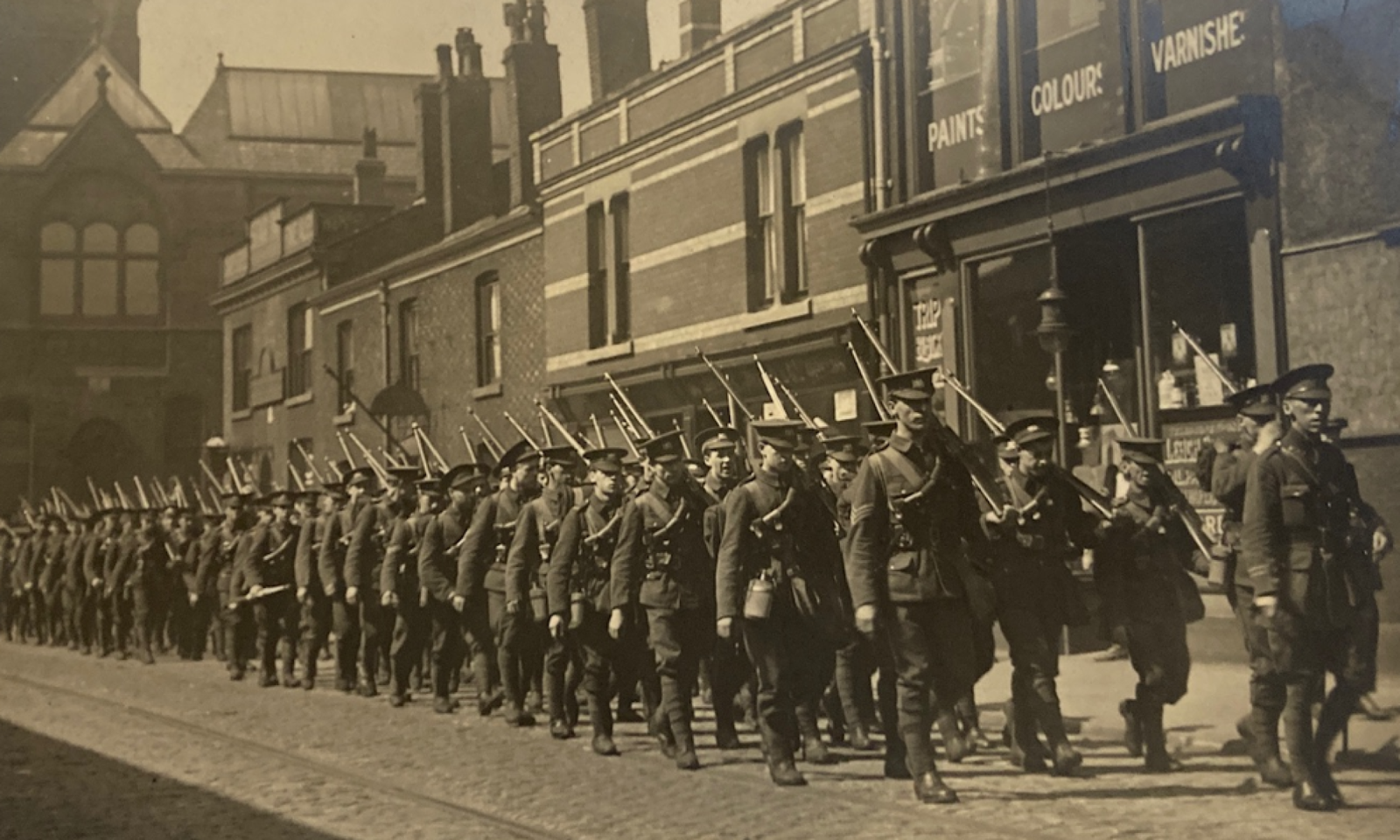
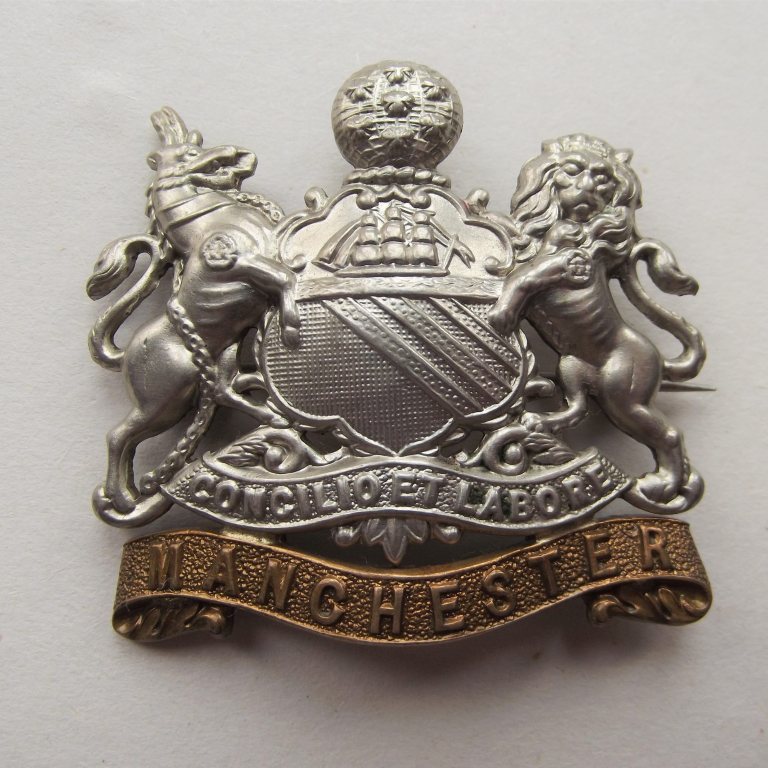
Fake News

There are several examples of errors and inaccuracies in articles and letters published in the Ashton Reporter during the war years. The point here is not to imply that there was anything intentionally published with errors but simply to serve as a reminder that just because an article or a soldier’s letter appeared in the Reporter does not mean that it was always 100% accurate.

Shot Armed Arab

The following letter was published in the October 31, 1914 edition of the Ashton Reporter:

A smart bit of work by a Dukinfield lad who was on guard at the Ashton Territorial Barracks in Cairo, is recorded by Private Herbert Fish, of the 9th Battalion. Writing to his father and mother, Mr. & Mrs. J.W. Fish, of 72, Astley Street, from Cairo, he says: –

“I am very glad to say I am still keeping in good health and good spirits. We have been able to see a bit more of Cairo since I last wrote. It is a fine place. You can spend days looking at the shops and big hotels. Last night (Sunday) I was on guard at the main barrack gates. I did my first post all right. The next time on was from 12pm to 2am. About 1.30am I heard footsteps so I challenged. He did not answer me after I had challenged him three times, so I fired at him and shot him through the neck. We brought him into the guard room to see who he was. He had a revolver in his hand, so it was lucky I fired when I did or else you might not have seen Bert again. Anyway, I am keeping the empty cartridge as a reminder of when I did guard at Kasr-el-Nil. He was an Arab. Today I had to go in front of the Colonel to give my evidence. The Colonel said that I did the right thing. Had I not done so, he said, I should probably have lost my own life and endangered others. The Brigadier-General said I was a very smart guard, and knew my duty. Not so bad, is it? I have been to see the Pyramids and Sphinx. They are fine things. Some of the stones are as big as our houses at home. Inside the base of the Pyramids are dozens of bazaars and shops. We do our marching at night instead of in the day time. We set out at eight o’clock and get back at eleven o’clock. It is simply fine. Talk about seeing life, it is not in it. If I had missed my chance of coming out here I should never have forgiven myself.”

However, in the December 26, 1914 edition the following was published:

Letter From Colonel Wade

To the Editor of the “Reporter”

Sir, I enclose a copy of a letter which speaks for itself. It was the result of a boyish prank. Private Fish did not anticipate the publication of the untrue and misleading statements which he now contradicts.

Whist I am writing may I also state that many of the accounts of the life of the Territorials and others in Cairo which I have read in your columns are merely the result of first and imperfect impressions. Again, many of the men of the 9th are experts at leg pulling.

Although we have had plenty of hard work, the change has done us a lot of good, not only from a military point of view but also physically. Generally, the health of the men has been good although I am very sorry to say we have lost two through sickness. With very few exceptions all have done their best to become soldiers in the true sense of the word.

Although our training has been greatly interrupted by having to provide guards at various places, escorts for prisoners, transports, etc., still the Battalion is a far different unit from what it was when we left Bury, and we are anxious to be given even a more substantive share in the task our country has undertaken.

If not taking too much space, I should like to say that I regret that I have not been able to reply personally to all those who have written me concerning members of the 9th Manchesters. I can assure them however that I have done what I could even to the neglect of my private correspondence.

Yours Faithfully

DH WADE, Lieut. Col.
9th Battalion, The Manchester Regt.
Kasr-el-Nil Barracks, Cairo
2nd December, 1914

From Private H Fish

To the Editor of the “Reporter”

Sir, I write the below lines to let you know that the letter you put into your paper about an Arab being shot in the neck at Cairo was absolutely untrue. There has been no Arab shot here. There was not a word of truth in it. I write this letter in contradiction to that letter. It is only right I should tell you this as it has made people believe something that was not true. Will you put it in your paper – I remain yours truly.

H. Fish
9th Battalion, Manchester Regiment
December 1914

Capt. J. A. Dearden

The following appeared in the October 16, 1915 edition of the Ashton Reporter under the “Personal” column:

PERSONAL

Captain J. A. Dearden, the adjutant of the 1/9th Battalion Manchester Regiment, is going out to the Dardanelles to rejoin the Ashton Territorials. Captain Dearden was invalided home from Egypt.

In fact, when Captain Dearden first arrived in the UK after being invalided from Egypt due to illness, he was granted 3 months leave to recuperate. This leave would have ended on October 12, 1915 and there must have been an assumption that he was fit for duty.  However, when he was medically assessed in October, instead of being passed fit he was ruled to be still unfit and awarded another 2 months leave. Captain Dearden was seriously ill and did not rejoin the 9th Battalion until after the war and he certainly did not return to Gallipoli. All of this information is provided in detail in Captain Dearden’s service record.

2/Lt. Alfred Gray

Alfred Gary was born on August 9, 1883 in Llangollen, Denbighshire, Wales. His father, Alfred Thomas Gray, was a merchant and spent his time between Manchester and Singapore. Alfred Thomas Gray married Jane Ann Foxwell in November 1881 in Llangollen and 11 months later Vernon Foxwell Gray was born in the Straits Settlements, Singapore. By 1891 Jane Gray was a 32-year old widow and she and her two children were living with her sister in Leamington Spa. By 1901 the family had moved to their own house in Chorlton-cum-Hardy, Manchester and Alfred, now 17, was working as an apprentice. By 1911 Alfred was employed as a traveling salesman in the cloth business and living with his mother and a domestic servant in Chorlton, his brother Vernon having left to seek his fortune in India.

Alfred Gray was commissioned as a Second Lieutenant in the 9th Battalion Manchester Regiment (Territorial Force), from the 13th (Service) Battalion Manchester Regiment, on August 21, 1915. On October 13, 1915 he embarked on His Majesty’s Transport Ship Scotian at Devonport for Gallipoli with 10 other Officers, arriving at Mudros on October 24th and joined the Battalion on Cape Helles on October 26, 1915.

On December 19, 1915 he lead 26 men of B Company in a diversionary frontal attack on the Turkish positions at the North East corner of Fusilier Bluff. A large mine, followed by 5 smaller mines, were detonated and the plan was for the men to advance and shelter in the crater for cover. The mines failed to create any meaningful cover for the men and they were mercilessly fired upon by the Turks. Four men were killed and 11 wounded before Lt. Gray was compelled to order the men to retire.

He somehow managed to survive Gallipoli unscathed and sailed with the Battalion to Egypt, arriving there on January 18, 1916. He attended a course of instruction in February and on October 10, 1916 left the Battalion for 47 days home leave in the UK, rejoining them on November 26, 1916.

He sailed with the Battalion to France, arriving on March 11, 1917. He was a platoon commander in B Company and is briefly mentioned in the Battalion war diary. He was promoted to Lieutenant on July 1, 1917 and shortly after, proceeded to Paris for 6 days leave on June 13-19, 1917. Not long after he returned, he was sent sick to hospital on July 11, 1917 and eleven days later was invalided to the UK and struck off the strength of the Battalion.

By October 1917 Alfred had recovered sufficiently to marry Edith Winnifred Brittain in Chorlton, the couple subsequently making their home in Walley Range, Manchester. In August 1918 their first son, Vernon Brittain Gray was born and was followed in October 1920 by Ross Foxwell Gray.

Meanwhile he continued to serve, now with the 8th (Reserve) Battalion Manchester Regiment in Filey, and was awarded the Military Cross on May 5, 1919 for “gallant and distinguished services in the Field”. He resigned his commission on February 22, 1921 retaining the rank of Lieutenant.

By 1939 the family were living in Southport and Alfred was a manager and buyer for a wholesale garment manufacturer. After the outbreak of World War Two both of his sons served in the Royal Air Force. By the 1960s Alfred and Edith had long since retired to a small town near Exeter where Edith passed away in August 1965. Alfred Gray’s exact date of death is unclear but he was by now 82 years old and after the debacle of December 19, 1915 must have counted every day since as a blessing.

2/Lt. John Reginald Tommis

John Reginald Tommis was born in Wilmslow on July 14, 1892 the oldest son of Richard and Annie Tommis (née Mills). By 1911 John was working as a travelling salesman for a rubber boot company and living with his parents and his younger brother, George Harold Tommis, in Wilmslow within walking distance of the Wilmslow Preparatory School where his father was the headmaster.

Shortly after the outbreak of war, on October 6, 1914, he joined the 7th Battalion, Manchester Regiment as a Private (#2687).  9  months later, on July 3, 1915, he was discharged from Crowborough to a commission as a Second Lieutenant in the 9th Battalion Manchester Regiment (Territorial Force) effective July 21, 1915. After 3 months training, on October 13, 1915, he embarked on His Majesty’s Transport Ship Scotian at Devonport for Gallipoli with 10 other Officers, arriving at Mudros on October 24th and joined the Battalion on Cape Helles on October 26, 1915.

He survived Gallipoli unscathed and sailed with the Battalion to Egypt, arriving on January 18, 1916. On July 23, 1916 he left for 35 days home leave in the UK where he married Annie Wilson. He rejoined the Battalion in Egypt in late August and on September 2nd he attended a course of instruction. He sailed with the Battalion to France, arriving March 11, 1917 and was almost immediately attached to the 42nd Division Signals Company where he remained for two months. From this point, he was effectively a Signals Officer attached the Royal Engineers and remained this way until the end of the war. He rejoined the Battalion on May 15 but two weeks later went sick to hospital where he remained for almost a month. Upon being discharged from hospital he was temporarily attached to the 210th Brigade of the Royal Field Artillery and shortly thereafter was promoted to Lieutenant on July 1, 1917. He remained with the R.F.A. until February 17, 1918 when he transferred to the 6th Battalion Manchester Regiment and was struck off the strength of the Battalion.

On April 6, 1918 he was severely wounded by a machine gun bullet to the chest from an aeroplane when repairing telephone lines on the Somme. The entrance wound entering the back of the top of his right shoulder. He coughed up blood for 4 days but there was no evidence of haemothorax, (a collection of blood within the pleural cavity which is potentially life-threatening). He was treated in Hospital in France until sufficiently fit to travel, at which point he was medically evacuated to England. He was medically assessed at the 4th London General Hospital, Denmark Hill on May 23, 1918, given an overly optimistic diagnosis and granted 2 months leave. He was however paid a wound gratuity of £83 6s 8d on June 14, 1918.

And so began a series of monthly medical assessments, at Blackpool, that each pronounced him permanently unfit for General Service and an expectation of reaching a fitness level of ‘C1’ within six months. At his August assessment he was pronounced to have reached fitness level ‘C2’ and subsequently awarded another gratuity of £166 13s 4d. He was again pronounced to have reached fitness level ‘C2′ on September 23, 1918 and was promptly assigned to the College of Technology, Manchester University under the temporary employment of the Officers’ University and Technical Committee (O.U.T.C). The OUTC was a short-lived government programme, initiated by the Minstry of Munitions and run by the Ministry of Labour, designed to provide university training for disabled officers in order to better equip them for post war employment in government and commerce.

Lt. Tommis was called to London for yet another medical assessment on July 1, 1919. He was awarded a one year £50 pension gratuity, on account of his injuries, granted for the period April 6, 1919 to April 5, 1920. He was then instructed to report to Prees Heath where he was demobilised on July 9, 1919.

He was still not a well man and in November 1919 he started coughing up blood again, as he had done when initially wounded, and he subsequently underwent an operation to remove the machine gun bullet that up until this time was still lodged in his upper chest. The operation was successful, leaving a 7 inch scar, and on February 4, 1920 he was medically assessed again, this time in Leeds where he and his wife were now living. The report was not entirely encouraging:

“States that he had haemoptysis [coughing up blood] 3 months ago. The bullet was then removed from the chest 10 weeks ago. Now has cough without blood. Feels weak and cannot exert himself. Small scar of entry at base of right acromion good scar, long fresh operation scar 7″ long across right chest just above nipple. A little superclavicular dulness, cavernous breathing top of right chest and lower neck. Evidence of old pneumothorax [collapsed lung] not yet completely absorbed. Looks ill.”

He was awarded another one year £50 pension gratuity, on account of his injuries, granted for the period April 6, 1920 to April 5, 1921 and informed that the pension could be awarded permanently until it had been paid annually for 5 years.

He resigned his commission on February 22, 1921 retaining the rank of Lieutenant. He stayed in Leeds working again as a travelling salesman. Lt. John Reginald Tommis died on June 10, 1965. He was 63 years old.

2/Lt. Robert Jacomb Norris Dale

Robert Jacomb Norris Dale was born in Kensington on November 13, 1884 and was the oldest of four children. His father, Bernard Dale, was a successful solicitor and managing partner in the firm of Dale & Company of Cornhill. Robert was educated at Haileybury College (1900-02) and later joined the Inns Court O.T.C. (popular with lawyers and others in the legal profession) in 1910, when he was 26, where he served for two years. By 1911 he was working as a solicitor in his father’s firm and living with his parents and two domestic servants in Wimbledon.

Robert Jacomb Norris Dale
Robert Jacomb Norris Dale with Father in the Background

But by 1914, apparently having now forsaken his father’s business and profession, Robert was working as a designer printer for Thomas Russell of Clun House, London a noted Commercial Advertising expert who was President of the Incorporated Society of Advertising Consultants and former Advertising Manager of the London Times.

The day after the outbreak of war, (August 5, 1914), he joined the 28th (County of London) Battalion, The London Regiment (Artists’ Rifles), as a Private (#1656). The Artists’ Rifles was a popular choice for volunteers of public schools and universities and as a Territorial Force battalion eventually provided a substantial number of officers both for the London Regiment and other Territorial Force regiments. After a very short period of training Pte. Dale embarked for France from Southampton on October 26, 1914 and was deployed with the British Expeditionary Force. He remained in France until June 17, 1915 when he left the Battalion at St. Omer to return to England upon being granted a commission as a Second Lieutenant in the 2/9th Battalion Manchester regiment (Territorial Force), dated June 18, 1915.

Interestingly, on his application for a commission he now described his occupation as: “Scholar; Author; Painter”.

He joined the 2/9th Battalion, Manchester Regiment while they were at Pease Pottage Sussex engaged in basic training. The battalion moved to Burham Camp, Kent on September 22, 1915 and around 3 weeks later, on October 13, 1915, he embarked on His Majesty’s Transport Ship Scotian at Devonport for Gallipoli with 10 other Officers, arriving at Mudros on October 24th and joined the 1/9th Battalion on Cape Helles on October 26, 1915.

Just under two months later he was tried by Field General Court Martial with Conduct to the prejudice of good order and military discipline under Section 40 of the Army Act 1881. He was found not guilty and no records remain regarding the specifics of the alleged offence.

He survived Gallipoli unscathed and sailed with the Battalion to Egypt, arriving on January 18, 1916. He was sent sick to hospital on May 2, 1916 and remained there for 12 days. Two weeks after his return he attended a 10-day course of Instruction and on September 15 was attached to the Royal Flying Corps for instruction in Aviation at 22 Reserve Squadron, Aboukir where he remained for a little over 2 months after becoming sick while with the RFC.

On February 22, 1917 he took 19 days leave in the UK, where he married the 24 year old Irene Rose Mawer, rejoining the Battalion in France on March 13. On April 8 he attended a course of instruction at the Army Telescopic Sights School rejoining the Battalion 9 days later. He was promoted to Lieutenant on July 1, 1917 and took an 11-day leave in the UK on July 28, 1917. On August 29, 1917 he was accepted to the Royal Flying Corps and was struck off the strength of the Battalion.

He was accepted as a Balloon Observer on Probation on September 24, 1917 and was attached to No. 33 Kite Balloon Section (9th Balloon Company) on October 20, 1917. He took another home leave in the UK from December 8-22, 1917.

Lt. Robert Jacomb Norris Dale was killed in action on January 31, 1918 in Italy when his balloon was attacked by an enemy aircraft and he was shot whilst in the basket. He is buried at Giavera British Cemetery, Italy and remembered on the Haileybury College Cloister Wall Memorial, Hertford Heath. He was 33 years old.

2/Lt. Frederick Beard

Frederick Beard was born in Manchester on April 6, 1890. His father, James Hogg Beard, was a Master Chemist and Druggist (a pharmacist). Frederick was the youngest of 3 boys and he also had a younger sister, Lucy. His father, James Hogg Beard, died in 1910 and by 1911 he was living in Marple with his mother, Jessie Ellen Beard (née Wraight), his brother Edward, his sister Lucy his aunt and a domestic servant. Educated at Manchester Grammar School, by 1911 he was employed as an export manager for a metal and hardware merchant.

He joined the 6th Battalion Manchester Regiment as a Private (#3057) on October 5, 1914 and was commissioned as a Second Lieutenant in the 9th Battalion Manchester Regiment (Territorial Force) on March 11, 1915. He joined the 2/9th Battalion in training at Southport and moved with them to Pease Pottage in June 1915. On October 13, 1915 he embarked on His Majesty’s Transport Ship Scotian at Devonport for Gallipoli with 10 other Officers, arriving at Mudros on October 24th and joined the Battalion on Cape Helles on October 26, 1915.

He survived Gallipoli unscathed and sailed with the Battalion to Egypt, arriving on January 18, 1916. On October 4, 1916 he was awarded 45 days home leave in the UK returning to Egypt in November. He sailed with the Battalion to France, arriving on March 11, 1917.

He was promoted to Lieutenant on July 1, 1917 and on July 29th left for 16 days home leave in the UK where he married Isabel May Ferguson. Upon his return to France he was immediately attached to the 126th Infantry Brigade where, on September 4, 1917 he was gassed at Ypres.

He was medically evacuated to England sailing from Calais on September 13, 1917 aboard the Hospital Ship Stad Antwerpen, arriving at Dover later the same day. He was medically assessed at Anstie Grange Military Hospital, Holmwood, on September 21, pronounced fit for General Service and given 3 weeks leave. He reported to the 8th Reserve battalion Manchester Regiment at Filey on October 11 but was immediately invalided, complaining of shortness of breath and palpitation after any exertion. He was medically assessed on November 28 at Scarborough and again on January 28, 1918; both indicating no improvement. On May 17, 1918, at Heaton Park, he was assessed for the last time and his condition pronounced severe and permanent. The examining Physician stating: “The injuries are severe and though improvement may take place in time, permanent ill effects have resulted from the gassing.”

He was forced to resign his commission on June 22, 1918 on account of ill-health contracted on active service, but retained the honorary rank of Lieutenant. Remarkably, his application for a wound gratuity was denied by the Ministry of Pensions, despite numerous protestations on his behalf, on the grounds of his condition not being  sufficiently serious.

After the war, he lived in Marple with his wife and became a company director. In 1920 they had a son, John Knowler Beard. He retired and moved to Buxton but his wife died in 1955 and sometime later he moved to Chipping Campden where he died on July 24, 1982. Lieutenant Frederick Beard was 92 years old.

2/Lt. Francis Cyril Hampson

Francis Cyril Hampson was born in West Didsbury on June 4, 1896. His father, Frank Hampson, owned a business that manufactured ladies’ blouses.  By 1911, Francis was a pupil at Stockport Municipal Secondary School and living in Stockport with his parents, Frank and Emily Hampson (née Midgley), his older sister Doris, his younger brother, Harry Midgley, his two younger sisters Hilda and Irene, and a domestic servant.

In September 1914 he joined the 6th Battalion Manchester Regiment as a private and 6 months later was commissioned as a Second Lieutenant in the 9th Battalion Manchester Regiment (Territorial Force) on February 18, 1915. He joined the 2/9th Battalion in training at Southport and moved with them to Pease Pottage in June 1915. He was made temporary Lieutenant on August 9, 1915. On October 13, 1915 he embarked for Gallipoli with 10 other Officers, arriving at Mudros on October 24th and joined the Battalion on Cape Helles on October 26, 1915.

He was sent sick to hospital in Alexandria on November 29, 1915 where he remained for 84 days before rejoining the battalion in Egypt on February 21, 1916. He didn’t stay with them long, because on March 14, 1916 he transferred to the Machine Gun Corps and was struck off the strength of the Battalion. He remained with the Machine Gun Corps until the end of the war and was appointed temporary Lieutenant September 1, 1916 and promoted to Lieutenant on July 1, 1917. He was disembodied on February 25, 1919 having returned from France in December 1918.

After the war he transferred to the Territorial Reserve as a Lieutenant on February 5, 1921 and in 1925 married Helen Clarkson. They lived in Stockport, where he became a company director, and in 1931 they had a daughter, Helen Patricia Hampson, followed in 1933 by a son, Francis N. Hampson.

Lieutenant Francis Cyril Hampson died on the Isle of Man on May 7, 1970. He was 73 years old.